Do Iris Spread? What You Need to Know About Growth and Control
Do iris spread? Yes, most iris plants do naturally spread through their underground rhizomes. This growth helps them fill out garden spaces over time.
But it can cause overcrowding if left unchecked. You’ll see new shoots emerge a few inches from the original plant each year.
Different types of irises spread at different rates. Bearded irises tend to spread faster and may double their growing area within a few years. Beardless irises grow slower than other types.
They need dividing less often. Sometimes you can wait up to ten years to split them.
To keep iris clumps healthy, divide the rhizomes every 3 to 5 years. Break them into 3 to 4-inch pieces. Each piece should have healthy leaves and roots.
This refreshes the plant and helps stop spreading. Proper spacing and sunlight also help keep iris growth controlled and vigorous.
Key Takeaways
- Bearded iris spread faster and need dividing every 3 to 5 years.
- Beardless iris can often go 10 to 12 years before division.
- Divide rhizomes into 3 to 4 inch pieces with healthy leaves and roots.
- Space iris rhizomes 12 to 24 inches apart to control spread effectively.
- Plant irises in full sun, 6 to 8 hours of light daily for best growth.
- Seed-produced irises take 2 to 3 years to bloom but can spread suddenly.
Do Iris Plants Naturally Spread in Gardens?

Irises naturally spread through thick underground stems called rhizomes. These rhizomes grow horizontally and produce new shoots and roots, expanding the clump over time. New iris shoots will appear around the original plant.
This happens even if you never divide them. You will notice these new shoots forming every year.
Iris plants create offsets besides rhizomes. These are small new plants beside the main one. Offsets help the plant spread slowly.
These offsets grow from the base, slowly filling in space close to the parent. This gradual spread happens without any gardener help. Still, it takes years to become noticeable.
The speed of natural spreading varies with iris type. Bearded irises need dividing every 3 to 5 years. They spread faster and get crowded easily.
Dividing keeps them healthy and blooming strong. Beardless irises like Siberian types grow slower.
They can go 10 to 12 years without dividing. Their rhizomes don’t get as dense or crowded.
Not dividing irises lets rhizomes crowd each other. This causes weaker plants and smaller flowers. Crowding lowers the nutrients each plant gets.
Over time, the patch may look dense, but the iris quality drops. Planting irises in containers keeps rhizomes contained.
This stops them from spreading outside the pot. You can also move containers around easily.
The rhizomes should stay healthy and about 3 to 4 inches long when dividing. This size includes a few leaf blades and some roots. Dig up the iris clump in late summer or fall.
Split the rhizomes into sections before replanting. This keeps your iris patch vigorous and healthy.
Iris seeds grow new plants but take time. They usually take two to three years to flower. Growing from seed is slower than dividing rhizomes.
This seed spread happens rarely compared to rhizome growth. Rhizomes help iris patches grow across your yard.
They spread quietly without any help from you. This slow growth fills in your garden naturally.
How Different Iris Types Vary in Spreading Rates
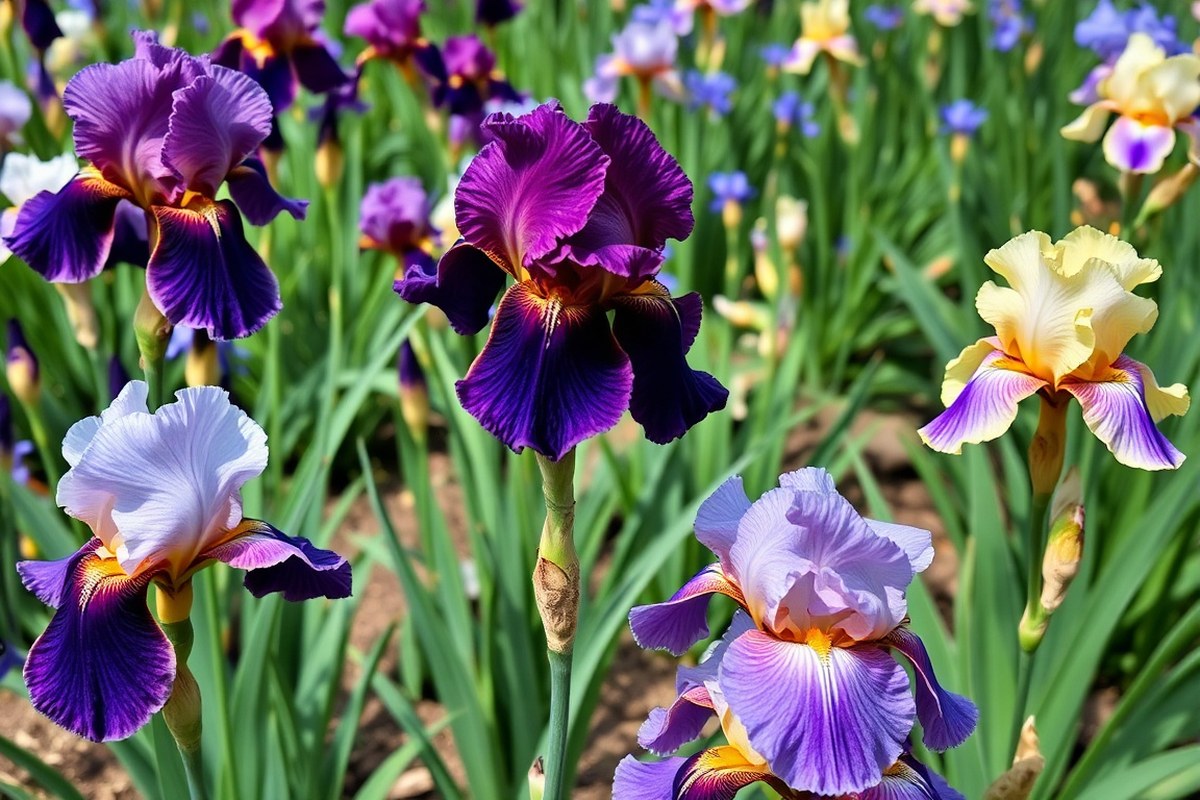
Irises spread mainly by two methods: rhizomes or bulbs. Rhizomatous irises include bearded and Siberian types. They spread faster than bulbous types.
Bulbous kinds include Dutch and reticulata irises. This difference matters for dividing plants.
It shows how often to divide. Dividing keeps irises healthy and controlled.
Rhizomatous Irises: Bearded and Siberian
Bearded irises grow through rhizomes that actively send out new shoots each year. They are among the fastest spreading irises, often producing 2 to 4 new fans annually. Siberian irises also grow from rhizomes.
They grow more slowly than some others. They form dense clumps, not spread out fast.
Both types thrive best with regular division to prevent overcrowding and promote flowering. Bearded irises should be divided every 3 to 4 years.
Siberian irises can go 4 to 5 years between divisions. They prefer well-drained to moist soils but need space for their rhizomes to expand sideways.
Bulbous Irises: Dutch and Reticulata
Bulbous irises grow from bulbs rather than rhizomes and multiply through offsets on those bulbs. Their spread is slower and more gradual. It often takes 5 to 6 years.
Then you see big expansion. Dutch and reticulata irises fall into this group.
Because they spread slowly, bulbous irises require less frequent division. They do well when planted 3 to 6 inches apart in soil about 4 inches deep. Proper spacing helps new bulbs grow well.
This avoids competition among plants. But it takes time for full clumps.
Typical Spread Rates and Division Frequency
The table compares common iris types. It shows how they spread and grow.
It also lists how often to divide. This helps you plan care and control how quickly your iris bed changes in size.
| Iris Type | Spread Method | Typical Spread Rate | Division Frequency |
|---|---|---|---|
| Bearded Iris | Rhizome | Fast, 2 to 4 new fans per year | Every 3 to 4 years |
| Siberian Iris | Rhizome | Moderate, dense clumping | Every 4 to 5 years |
| Japanese Iris | Rhizome | Moderate, prefers moist soil | Every 3 to 4 years |
| Dutch Iris | Bulb offsets | Slow, gradual multiplication | Every 5 to 6 years |
| Reticulata Iris | Bulb offsets | Slow, small clusters | Every 5 to 6 years |
Planning your iris care around their natural spread lets you avoid overcrowding or bare patches. Fast-spreading rhizomatous irises demand more frequent division to stay healthy. Bulbous irises take longer to fill space but still need occasional dividing to prevent decay.
Use root barriers or edging to control rhizome spread and avoid unwanted expansion.
How Fast Do Iris Rhizomes Spread Each Year?
Typical Annual Spread Distance of Iris Rhizomes
Iris rhizomes usually spread 6 to 12 inches horizontally each year. This spread happens just below or at the soil surface.
Rhizomes send out lateral stems there. You can see new shoots appearing around the original plant within this range every growing season.
The exact distance varies by iris type and growing conditions. Some irises with stronger rhizomes may reach up to 18 inches.
This happens especially when planted close together. Usually, spacing rhizomes 12 to 24 inches apart controls how far they fill in quickly.
How Soil Quality and Sunlight Affect Spread Rates
Loose, well-drained soil helps iris rhizomes spread faster and stay healthy. Compact or poor drainage slows their growth because the roots need oxygen and space to expand. Irises like lighter soil with six to eight hours of direct sun daily.
Sunlight encourages active growth above and below ground. In shady spots, spreading slows down. The plant uses less energy on rhizomes there.
Soil rich in nutrients speeds spreading after the first year. So amending soil can help if your garden has ho-hum dirt.
Climate Effects on Iris Rhizome Expansion
Warm climates generally promote faster iris rhizome growth than cool, wet areas. The rhizomes grow best in moderate to warm temperatures with dry periods that prevent rot. In colder regions, spreading slows because rhizomes go dormant in winter.
Heavy rain areas may risk rhizome rot. This can stop the plant from spreading well. Good drainage and avoiding deep planting help prevent this.
Some iris types tolerate moisture better. So climate and iris selection both shape how quickly these plants multiply.
Planting Depth and Spacing Impact Spread
Planting iris rhizomes just below or at the soil surface lets them spread naturally. The tops of the rhizomes should remain visible, helping new shoots get sunlight.
Planting too deep slows growth. Rhizomes then struggle to push out new shoots.
Spacing rhizomes 12 to 24 inches apart is common. Closer spacing speeds up coverage but may cause overcrowding and disease.
Wider spacing slows early spread. But it improves air and room for growth.
Speed Variations by Iris Types and Care
Bearded irises spread steadily but often slower than some rhizomatous types like Siberian or Louisiana irises. These other types can sometimes expand further each year because their rhizomes grow more aggressively. Caring for the plants with fertilizer after year one can boost rhizome spread.
Dividing crowded clumps also restarts healthy growth and can encourage rhizomes to multiply faster. Skipping these care steps often causes slow, thin spreading.
Plants may face disease or competition. Regular care keeps the growth rhythm steady and predictable.
When and How to Divide Irises to Control Spread
Divide irises every two to three years to keep them healthy and blooming well. You’ll want to divide them when the clumps start to crowd or blooming slows down. The best times are early spring before shoots appear or late summer after leaves yellow.
Signs Your Iris Clump Needs Dividing
Look for rhizomes pushing and overlapping each other as a clear sign to divide. The clump needs dividing when it stops blooming or soil feels dense. Also, when rhizomes circle the pot or crowd too tightly, divide and replant.
After a few years, irises spread more aggressively and may suffer from overcrowding. You might notice fewer flowers and smaller leaves on crowded plants. Those signs show your irises need dividing soon.
Tools and Preparation for Dividing
Gather a sharp garden knife or pruning shears, gloves, and a trowel for digging. Have fresh compost or soil ready to improve your planting spot. Use a bucket or tub to soak the rhizomes briefly for easier cleaning.
Pick a dry, mild day to avoid soggy soil damage. Wear gloves to avoid irritation from rhizomes and old leaves. Prepare pots or raised beds if you plan to replant in a new spot or container.
Step-by-Step Division and Replanting
To divide iris rhizomes, cut them into 4 to 8 inch sections. Each should have healthy rhizomes and 4 to 6 leaves. Follow these steps for good growth after replanting.
- Dig up the iris clump gently, loosening soil around rhizomes.
- Shake off excess dirt and soak rhizomes in water for 15 minutes.
- Use a sharp knife to cut rhizomes into sections, each 4, 8 inches long.
- Remove old, damaged, or rotting parts and trim leaves to 6 inches.
- Disinfect the knife between cuts to prevent disease spread.
- Prepare new planting holes with loosened soil and some compost.
- Plant rhizomes horizontally, just under the soil surface with roots down.
- Water well after planting to settle soil around roots.
Dividing in late summer allows time for rhizomes to establish before cold. Replant only healthy, firm rhizomes to enjoy better blooms. Avoid overcrowding to keep irises vigorous and blooming strong for years.
Strategies to Control Iris Spread Without Dividing
Planting iris in containers can effectively stop their rhizomes from spreading into your garden. Choose containers at least 12 inches wide with drainage holes for healthy root growth. You’ll need to repot or divide irises every 3 to 5 years.
This happens when roots fill the pot. Growth also slows down by then.
Physical barriers such as buried edging or landscape fabric help keep iris rhizomes confined. Use strong materials like metal or thick plastic for barriers. Bury them at least 8 inches deep.
This stops rhizomes from spreading beyond your bed. These barriers offer a long-term way to control spread without disturbing the plants.
Prune iris foliage after they bloom to tidy your garden bed. This helps the plant focus energy on roots. It also prevents spreading by seeds.
Avoid cutting leaves too early because the foliage powers rhizome growth by producing energy. Cut leaves back to 1 or 2 inches after frost kills them.
Do this in fall or early spring. Make sure it’s before new shoots come up.
- Place buried edging at least 8 inches deep around iris beds
- Use containers 12 inches wide or bigger with drainage holes
- Cut back foliage after frost, not before bloom ends
- Repot container irises every 3-5 years to prevent root crowding
- Remove fallen leaves and debris each fall to reduce pests
- Consider slower-growing iris varieties in poor soil for natural control
Cutting iris leaves too early can weaken rhizomes and slow growth. Wait until after the bloom or after frost to prune.
Containers let you control where irises grow and their spread. They do need upkeep like repotting and dividing sometimes. This keeps them healthy and neat.
Physical barriers work well underground and require less maintenance once installed. Pruning at the right time supports strong rhizomes that don’t send out runners wildly. Combining these methods can keep your iris clumps neat and your garden tidy without constant digging.
How to Plant Irises to Minimize Overcrowding and Spread
Spacing affects how quickly your irises spread and crowd each other. Plant rhizomes about 18 inches apart to give each one room to grow without overlapping roots.
When planting groups of three, space them about 24 inches apart. This allows clumps to expand without crowding your garden bed.
Planting depth is another key factor that influences iris growth. Plant rhizomes just under the soil surface. Keep their tops exposed or cover lightly with about an inch of soil.
Planting rhizomes too deep causes leaves to grow without flowers. It also encourages shallow spreading instead of tight clumping.
Sun exposure impacts rhizome multiplication rates too. Most irises prefer full sun, meaning at least six hours daily.
Too much shade slows iris growth and cuts down blooms. This can cause uneven spreading and weak plants that crowd.
- Point rhizomes away from each other when planting
- Space rhizomes 18 inches apart for single plants
- Space groups of three rhizomes about 24 inches apart
- Plant rhizomes at or just below soil surface, not deeper
- Use containers at least 12 inches deep by 18 inches wide
- Give irises at least six hours of direct sun daily
Many gardeners plant irises too deep, hoping this protects roots. Instead, this often causes poor blooming and forces plants to spread roots closer to the surface. Also, improper spacing invites quick overcrowding, crowding out rhizomes and reducing flower production.
Setting rhizomes shallow and spacing them well cuts down early transplanting needs. Healthy spacing and correct depth help irises form dense clumps but avoid overgrowing their allotted space.
This balance keeps your iris bed tidy with strong blooms for years. You avoid constantly dividing or controlling your plants.
Role of Seeds and Climate in Iris Plant Expansion
Iris plants can spread through seeds, but this method is slower than rhizome growth. Seedlings take several years to reach maturity, often three to four years before they flower well. During this time, new plants may look weak or sparse compared to older rhizomes.
Climate strongly affects how irises grow and spread underground. In colder zones, like USDA zone 4, growth slows down and rhizomes spread more slowly. Warmer zones, such as zones 7 or 8, allow faster rhizome development and quicker clump expansion.
Seed pods form after the flowers fade if you don’t remove the spent blooms. These pods release seeds that can sprout far from the mother plant. Removing flower heads before seeds appear helps slow seed spread.
This won’t stop the rhizomes from growing underground. Rhizomes will keep spreading beneath the soil.
Most iris divisions happen in late summer or early fall. This is after the plants bloom. It must be done before frost starts.
This timing matches the natural cycle where plants prepare for dormancy and heal well after dividing. Dividing too early stresses the iris. Dividing too late lets unwanted seedlings grow harder to remove.
Different iris types vary in hardiness. Dwarf crested iris (Iris cristata) is native to North America. It grows best in zones 4 through 8.
These conditions suit its natural habitat. Knowing which zone you live in helps predict how quickly your iris will spread. It also guides how often you should divide rhizomes to control growth.
Taking care to discard any old or diseased rhizome parts during division helps keep plants healthy. Sections infected by iris borers or showing rot don’t recover well. Cleaning rhizomes this way stops disease spread and encourages better growth in the next season.
Plant irises in groups of three or more for a fuller look. This also helps the clump spread stronger over time. Group planting improves the garden’s overall appearance.
Small clusters establish quicker than single plants. This practice also makes managing seedlings and rhizomes easier by concentrating growth.
When to Consult a Professional About Iris Spread Problems
Iris plants can become a nuisance when they spread too much in a garden bed. Their rhizomes expand steadily every year, often leading to overcrowded patches that stifle blossoming.
Your iris bed looks packed with rhizomes stacked on each other. That means you might need more serious control soon.
Iris often takes over flower beds if you don’t check them. This usually happens after five to six years. By then, dividing small clumps won’t keep up with growth.
Taking chunks from edges also won’t be enough. You see iris shoots pushing into other plants or spaces. That might mean you need professional help.
Calling an expert is wise if your efforts to dig up and replant iris aren’t working. Pros can dig up big clumps and reset them deeply. They safely remove extra plants to protect nearby flowers.
They also remove iris from wrong spots without hurting soil. This keeps nearby roots and soil structure intact.
Professional control might include using specialized tools or herbicides not available to home gardeners. This service usually costs between $150 and $400 per visit.
The price depends on the infestation’s size. It’s a solid option if the iris spread causes major garden disruption or affects plant health.
Cut iris stalks at the base, right to the rhizome. This helps slow the plant’s spread.
Step-by-Step Action Plan to Manage Iris Spread
Follow these steps to keep your iris plants healthy and under control. Each step helps you see clear results in your garden.
- Before planting: Choose iris types that spread slowly or minimally. This reduces overcrowding later on.
- Early spring: Plant irises with enough space, at least 12 to 18 inches apart. You’ll notice they have room to grow without bumping into each other.
- Late spring to early summer: Monitor rhizome spread by checking soil every few weeks. Stop if you see rhizomes pushing too far under the soil.
- Every 3 to 4 years in late summer: Divide overcrowded irises by digging and separating rhizomes. Success looks like healthier plants and no mushy or crowded roots.
- Summer months: Trim dead leaves and flower stalks to slow seed spread. Check for unwanted seedlings around your iris beds.
- Fall: Apply a balanced fertilizer to support strong root growth without encouraging too much spread. Watch that the plants don’t crawl over garden edges.
- Regularly throughout the growing season, use ground covers. These help block rhizomes from spreading. You can also add edging barriers to keep them contained. Barriers should be at least 6 inches deep.
Frequently Asked Questions
Can Iris Plants Take over a Garden Quickly?
Yes, especially bearded irises can spread fast, growing 2 to 4 new fans yearly. Keep them divided every 3 to 4 years to avoid overcrowding.
Do Iris Seeds Grow into New Plants Often?
Iris seeds rarely cause new plants in gardens. Rhizomes spread most irises, making seed growth less common.
How Deep Should You Plant Iris Rhizomes?
Plant rhizomes shallow, just under the soil surface. This helps them get enough air and prevents rot.
Can Iris Spread Be Stopped Without Digging Them Up?
Rhizome spread can be limited with root barriers or edging around beds. This blocks horizontal growth without digging.
Why Do Iris Rhizomes Rot If Buried Too Deep?
Burying rhizomes too deep traps moisture and blocks air. This causes rot and weak plants.
Are Iris Rhizomes Edible or Toxic?
Iris rhizomes are toxic if eaten. Keep them away from pets and children.
Final Thoughts
Iris plants do spread but you can keep them in check with simple steps. Watch their growth and divide regularly for best results. Start by spacing new irises well to prevent crowding.