How to Care for Pomegranate Tree: 8 Key Steps for Healthy Growth and Fruit
Caring for a pomegranate tree begins by selecting a suitable location. These trees may reach 20 feet in height and width.
Make sure the spot offers plenty of space. Keep a distance of at least 8 feet from structures or other plants to prevent overcrowding.
Next, prepare the soil well before planting. Pomegranates like well-drained soil and plenty of sun. Spread mulch around the tree after planting to keep moisture in and cut down weeds.
Watering is key for young trees to get established. Aim for about one inch per week, adjusting with the seasons.
Too much water can cause problems. So let the soil dry a bit between watering sessions.
Key Takeaways
- Plant pomegranate trees 8 feet away from structures and other trees.
- Choose a full-sun location with well-drained soil for best growth.
- Mulch around the base to retain moisture and prevent weeds.
- Water young trees about one inch weekly, less in cooler months.
- Watch for overwatering by checking for soggy soil near roots.
- Allow room for the mature tree’s 20-foot height and width.
1. How to Plant and Establish Your Pomegranate Tree
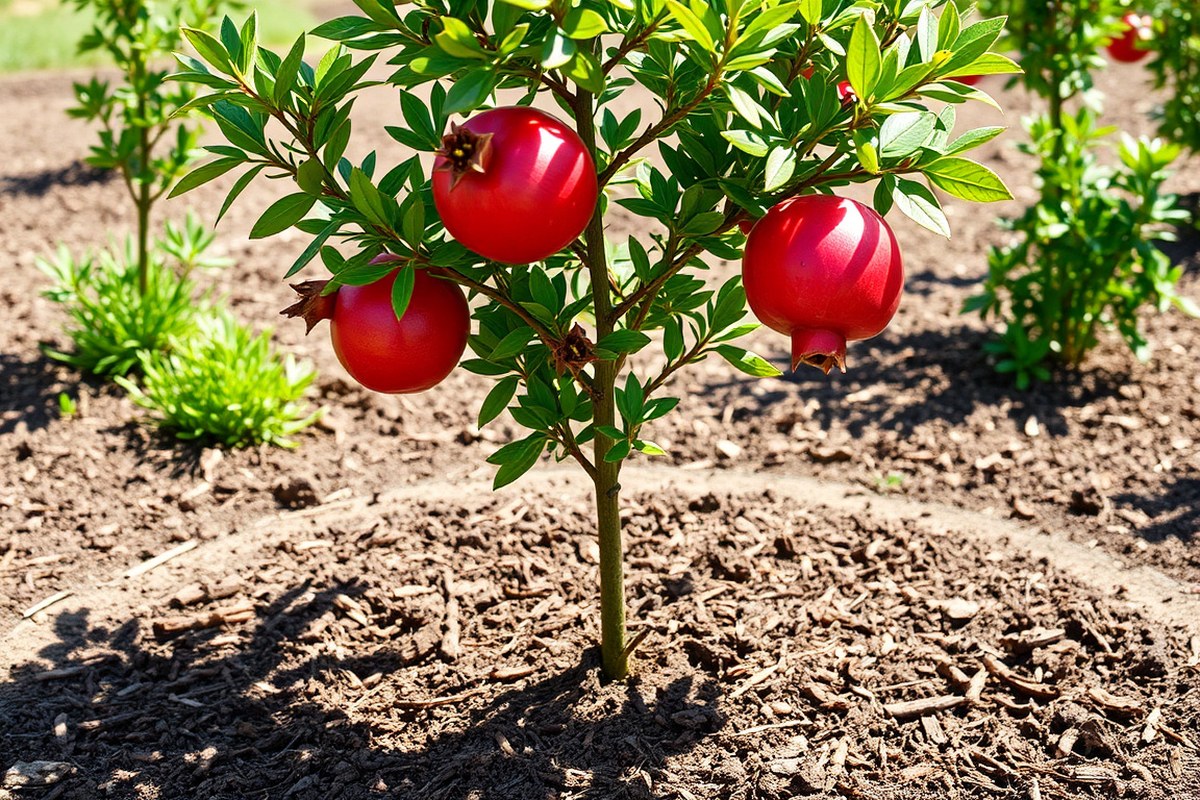
Pomegranate trees need full sun to grow well. Choose a spot with at least 6 hours of direct sunlight daily. The soil should drain well to avoid root rot, as pomegranates don’t like soggy feet.
Pomegranate trees thrive in well-draining loam or sandy loam soils with a pH between 5.5 and 7.0. Avoid heavy clay or waterlogged soils to prevent issues. Improve drainage by using raised beds or mixing in sand and organic material.
Spacing depends on your goals. For a backyard, leave at least 15 feet between trees.
That gives them enough space to grow up to 16 to 20 feet tall without crowding. Commercial orchards go wider, about 18 feet apart.
Here are steps to plant and set up your pomegranate tree for strong growth:
- Dig a hole roughly twice as wide and equal in depth to the root ball.
- Test your soil’s drainage by filling the hole with water and waiting an hour.
- Amend soil with compost or sand if drainage is slow, mixing well.
- Place the tree in the hole with the top of the root ball level with ground.
- Backfill carefully, firming the soil lightly around the roots to remove air pockets.
- Water thoroughly to settle the soil and hydrate the roots.
- Apply a 2-inch layer of organic mulch like wood chips around the base to conserve moisture.
- Avoid pruning during the first year to help the tree establish strong branches.
2. Watering Needs Through the Seasons

Pomegranate trees need different amounts of water depending on the season. They require regular watering in spring and summer to support growth and fruit. In autumn and winter, watering should slow down to avoid root problems and overwatering.
Spring Watering Schedule
Water your pomegranate tree every 7 to 10 days in spring. This supports new leaf growth and flowering, which is important for fruit set. The soil should stay moist but not soggy to avoid root stress.
Check soil moisture by sticking your finger about 2 inches deep near the base. When the soil feels dry, water your tree deeply. Mulch helps keep moisture consistent and promotes healthy growth.
Summer Irrigation Tips
Increase watering to every 5 to 7 days during summer. Hot weather can cause fruit drop and heat stress if the tree is too dry. Deep watering helps the roots stay hydrated and encourages larger, juicier fruit.
Use drip irrigation or slow-soak methods to water evenly. Avoid watering just the surface, which encourages shallow roots and increases drought risk. Monitor leaves; yellowing with wet soil may mean overwatering.
Autumn Preparation Watering
Reduce watering to about every 14 days in autumn. This readies the tree for winter dormancy by slowing growth without causing drought stress. The leaves may still need moisture, but the roots require less frequent watering.
Keep an eye on the weather and soil. During a long dry spell, give your tree a good soak. Mulching can guard against drying and temperature swings as the season changes.
Winter Dormant Period Watering
Water only during extreme drought in winter. The tree is dormant and uses very little water at this time. Overwatering in cold, wet conditions can lead to root rot and other problems.
Make sure your soil drains well to prevent water from pooling around roots. In mild, dry winters, water deeply once or twice during dry times.
| Season | Watering Frequency | Goal |
|---|---|---|
| Spring | Every 7, 10 days | Support new leaf growth and flowering |
| Summer | Every 5, 7 days | Prevent fruit drop and heat stress |
| Autumn | Every 14 days | Prepare the tree for winter dormancy |
| Winter | Only during extreme drought | Avoid saturation during dormant periods |
Pomegranate trees tolerate drought but thrive with consistent watering. Avoid overwatering by ensuring the soil drains well and doesn’t stay wet. Watch for yellow leaves and soil moisture to catch watering problems early.
Water deeply and less often rather than frequent shallow watering to build strong roots.
3. Fertilizing for Strong Growth and Fruit Production
Feed your pomegranate tree in early spring using a balanced fertilizer. A slow-release, organic fertilizer designed for fruit trees works best. This encourages strong growth and boosts fruit production.
You can put compost or organic fertilizer in February. Repeat this 2 to 3 times yearly if needed.
The exact timing depends on your local climate and how well the tree is growing. Regular feeding helps keep your tree healthy and productive.
How much fertilizer to use depends on your tree’s size. Young trees need less, about half a pound per feeding.
Mature trees might need up to two pounds. Avoid over-fertilizing, as it can cause too much leaf growth and fewer fruits.
Organic fertilizers are effective and safer for the environment. They improve soil health and release nutrients slowly. Examples include compost, well-rotted manure, or commercial organic fruit tree fertilizers.
| Factor | Target | Notes |
|---|---|---|
| Fertilizer type | Balanced, slow-release | Preferably organic for fruit trees |
| Application time | Early spring and February | Repeat 2-3 times per year if needed |
| Amount per feeding | Young tree: 0.5 lb; mature tree: up to 2 lbs | Avoid over-fertilizing; adjust by size |
| Soil pH | 5.5, 7.2 | Pomegranate tolerates various soils if well-drained |
During feeding, water your tree well to help nutrients soak in. Keep observing the tree’s growth and fruit output to adjust feeding amount or timing.
Watch for very dark leaves or few fruits. Cut back fertilizer then.
Regular fertilizing, combined with watering and pruning, will help your pomegranate tree thrive. It takes some patience to see full fruit production, usually starting around year three. With good care, your tree will reward you with delicious fruit for years.
4. Pruning Techniques to Maximize Fruit and Tree Health
Pruning your pomegranate tree helps improve air circulation, lets more light inside, and boosts fruit quality. Do most pruning in late winter to early spring before new growth starts. Remove dead or crowded branches first.
Cut tall shoots next. Shape the tree for easier picking.
Timing Your Pruning Pruning
Prune your pomegranate tree in late winter or early spring before leaves and flowers appear. This timing helps the tree heal faster and prevents disease.
Avoid heavy pruning during summer because the tree holds fruit then. Cutting can reduce yield.
Light pruning every three to four years works well once your tree is mature. The tree should be young, about 2 to 4 years old and 3 to 4 feet tall.
Start shaping it gently. Regular annual pruning stops branches from getting too crowded and maintains good tree health.
Removing Dead and Diseased Wood
Start pruning by cutting out dead, damaged, or diseased branches. These wood pieces can spread decay and pests if left on the tree. Look for dry, brittle wood or spots with black or brown discoloration.
Removing these branches opens space inside the tree, improving airflow. This reduces mildew and harmful fungi. Use sharp pruning shears and cut branches back to healthy wood or their source.
Thinning for Airflow and Light
Thin crowded limbs to let sunlight reach the center of the tree. Shiny leaves and fruit develop better with more light. Crowded branches also trap moisture, which leads to diseases and smaller fruit.
Remove crossing or rubbing branches to stop wounds and pest entry points. Space out stems so fruit clusters have at least 6 inches between them for better growth. This step lets the tree build larger, sweeter pomegranates.
Height and Shape Control
Trim the tallest vertical shoots to keep the tree’s height manageable. Pomegranates can reach 12 to 20 feet if left alone, which makes harvesting hard. Cutting tall limbs encourages more branching lower down and easier fruit picking.
Keep the tree’s shape balanced but avoid heavy pruning that removes too much fruiting wood. Pomegranates bear fruit on old branches, so save the main limbs. Remove suckers growing near the base to focus energy on the main stems.
Follow these step-by-step pruning actions for good results:
- Check the tree for dead, damaged, or diseased branches and cut them out.
- Remove any branches that cross or rub each other inside the canopy.
- Thin crowded areas so branches are spaced evenly with good airflow.
- Cut back any vertical shoots that grow taller than the main canopy.
- Remove suckers or unwanted growth from the tree base or trunk.
- Leave healthy older branches, since they produce the bulk of the fruit.
- Use clean, sharp tools and make cuts at a slight angle for faster healing.
- Dispose of removed wood away from the tree to reduce disease risk.
5. Managing Common Pests and Diseases
Pomegranate trees often face pests like aphids, whiteflies, and pomegranate butterflies. These bugs suck sap or lay eggs, harming leaves and fruit.
Watch for curled or sticky leaves, or tiny bugs on the undersides of branches. Early spotting helps stop infestations from spreading across the tree.
Common diseases include fungal problems like anthracnose and rust. These cause leaf spots, fruit rot, or twig dieback. Check regularly for brown or orange spots on leaves and blackened fruit areas.
Good airflow and sunlight reduce these risks. Use a fungicide labeled safe for pomegranates if you spot fungal signs. Follow the package directions carefully to avoid damage or residue.
Organic options include neem oil or insecticidal soap to control most pests. Spray the entire plant, focusing on affected spots, early in the morning or late afternoon. Repeat every 7 to 10 days while pests persist.
Chemical insecticides are available but should be a last resort. They can harm beneficial insects and require careful handling. Always read labels to match the product with your problem.
Proper tree care lowers pest and disease risk. Avoid planting near other susceptible plants, which spread bugs and germs. Keep your tree well-watered but not soaked.
Prune crowded branches to let light through. These steps make your tree stronger and less attractive to invaders. Check your tree weekly during growing seasons for signs of trouble.
Call a licensed arborist or local extension service if pest outbreaks or diseases worsen rapidly. Early professional help can save your tree from severe damage.
Serious infestations may cause fruit drop, extensive leaf loss, or twig death. At this stage, home treatments often fail. Professionals can identify the problem accurately and apply stronger, approved controls safely.
This matters when you use strong chemicals. It also helps if pests attack.
Your tree could face diseases too. Their service may cost a few hundred dollars but protects your pomegranate’s future.
Monitor your tree after treatments. Look for new growth, healthy leaves, and developing fruit as signs of recovery. When issues come back after treatment, change your care routine.
You might also ask experts for help. Healthy trees tolerate minor pest presence without damage. So focus on balance, not complete elimination.
6. Recognizing and Resolving Growth and Fruit Issues
Fruit splitting happens when the pomegranate absorbs water too fast after a dry spell. It causes the skin to crack and the fruit to rot quickly. Keep soil moisture steady with regular watering.
Sandy loam drains fast but holds nutrients well. This helps avoid moisture swings.
Sudden heavy rain or watering after dry soil usually triggers fruit splitting. Mulch around the base to keep moisture even. Water deeply once or twice a week.
Avoid shallow, frequent watering. Using a drip irrigation system helps control this balance better than hose watering.
Premature leaf drop often signals stress from drought, nutrient problems, or pests. Check soil for dryness or compactness often. Silty soil can get hard and block water.
Roots may struggle to soak water. Clay loam needs organic matter added for improved drainage, which helps roots breathe.
Poor flowering or fruit may happen with flower-only types. Your tree may also lack enough nutrients. This affects fruit set.
Unlike some other fruit trees, a single pomegranate can set fruit on its own. But planting more than one tree of the same variety often improves fruit set.
Ensure your tree gets balanced fertilization, focusing on nitrogen, phosphorus, and potassium. A lack of any of these can reduce flower production, which limits fruit. Slow-release fertilizer applied early spring encourages growth and healthy flowers by the time warmer weather hits.
Leaf yellowing or spots might show nutrient deficiency or pest damage. Common pests cause leaf drop and poor fruit quality.
So look closely for mites, aphids, or scales. Treat these promptly with horticultural oil sprays or insecticidal soap, following label instructions for safety.
Consistent watering prevents nutrient shortages and environmental stress that reduce fruit quality. Heavy clay soil holds water but risks root rot.
So raised beds improve drainage and stop waterlogging. Well-drained soil supports root health and reduces fruit drop.
7. Harvesting Pomegranates at Peak Ripeness
Pick pomegranates when they have turned bright red and feel heavy. The fruit won’t get sweeter after harvest, so timing matters. Use careful cutting tools to snip them without hurting the tree.
Signs of Ripe Pomegranates
Pomegranates change from green to a deep pinky-red when ripe. They also lose their round shape, developing flat sides or “squared off” edges. The crown of the fruit grows more prominent and firm around harvest time.
Fruit that falls or cracks open has reached peak ripeness. A ripe pomegranate feels heavy compared to others the same size. These cues tell you the taste and nutrients inside are at their best.
Safe Harvesting Methods
Cut the fruit from the branch with sharp pruners or scissors. Don’t pull or twist, which could break small branches or damage bark. Leave about half an inch of stem attached to the fruit to reduce skin breaks.
Wear gloves to protect your hands from the juice, which stains easily. Work in the cooler part of the day to keep fruit fresh. Handle each pomegranate gently; bruises lower quality and shelf life.
- Use sharp scissors or pruning shears for clean cuts
- Avoid pulling or twisting fruits off the tree
- Leave about ½ inch of stem on the fruit
- Harvest in the early morning or late afternoon
- Wear gloves to avoid staining your hands
- Handle gently to prevent bruising
Storage and Preservation Options
Store pomegranates in a cool spot, ideally at 40 to 45°F with 85% humidity. The fruit can last up to two months under these conditions. Keep them away from direct sunlight and moisture to prevent spoilage.
You can freeze the seeds for longer storage. First, open the fruit, spread the seeds on a tray, and freeze until solid.
Put the frozen seeds into airtight bags or containers. Frozen seeds keep well for up to six months.
8. Winter Care and Growing in Cooler Climates
Pomegranate trees can survive some frost, but temperatures below 20°F often cause damage. Hardier cultivars tolerate lows near 7 to 12°F, especially in protected spots. In cold zones, you better plan how to shield or move your tree before temperatures drop.
One way to protect pomegranate trees during winter is to plant them near a south-facing wall. The wall reflects heat and shields from cold winds.
If your area dips below 10°F, use cold frames or frost cloths to cover the tree during icy nights. Avoid heavy fertilizing in late fall to prevent new growth that frost can kill.
Container growing is a smart choice for colder climates. You can move pomegranate trees indoors to a sunny room or greenhouse before frost hits.
Large pots work best to support root health. Bring the tree out after the last frost to keep it thriving through warmer months.
Choosing the right cultivars helps pomegranates survive colder weather. Look for varieties known to handle zone 7 or lower, like ‘Russian 26’ or ‘Salavatski’.
Many cultivars thrive in USDA Zones 7 to 10. In zones colder than 7, container planting is often necessary but effective.
Bring your container-grown pomegranate indoors before the first frost to prevent cold damage.
Step-by-Step Action Plan for Your Pomegranate Tree
Follow these steps to keep your pomegranate tree healthy and productive through the year.
- At planting: Choose a sunny spot with well-draining soil. Dig a hole and fill it with water. See if it drains under an hour. If yes, the soil drainage is good.
- Week 1: Water deeply right after planting until the soil is moist 12 inches deep. The leaves should look fresh, not wilted.
- Month 1: Apply 3 inches of organic mulch around the base. Keep mulch a few inches from the trunk. This prevents rot. Mulch slows weeds and locks in moisture.
- Spring (year one): Fertilize with a balanced fertilizer, about 1 pound per tree if mature. Look for new shoots coming strong and green.
- Summer: Water every 7 to 10 days during dry spells. Check by sticking your finger 2 inches into the soil, if dry, it’s time to water.
- Late summer: Prune dead or crossing branches to improve air flow. Your tree should look open and tidy.
- Fall: Watch for fruit color and softness to decide harvest time. Ripe fruit will make a metallic sound if tapped.
- Winter: Protect young trees from frost by covering them or moving container trees indoors. Leaves should stay green and firm.
Frequently Asked Questions
How Do I Know When to Water My Pomegranate Tree During Dry Periods?
Water your pomegranate tree deeply when the soil feels dry an inch below the surface. Too much water can cause root rot in pomegranate trees.
Only water deeply when the soil feels dry. This is especially important during hot, dry weather.
Can Pomegranate Trees Grow Well in Containers Indoors?
Pomegranate trees can grow indoors successfully with enough light. They need at least 6 hours of direct sunlight daily.
Use a bright, sunny window for best results. Choose a large container with good drainage and use a well-draining soil mix for best results.
What Type of Soil Is Best for My Pomegranate Tree?
Pomegranate trees thrive in soil that drains well and stays loose. Aim for a soil pH between 5.5 and 7. Avoid clay soil that traps water and damages roots.
How Long Does It Take for a Pomegranate Tree to Start Fruiting?
Pomegranate trees usually begin fruiting at 2 to 3 years old. Proper care, including good watering, fertilizing, and pruning, encourages earlier and more abundant fruit.
Can I Propagate a Pomegranate Tree from Cuttings?
Yes, you can root hardwood cuttings in late winter. Keep pomegranate cuttings warm and moist to help roots develop.
After they root, move them gently to a permanent planting spot. Handle them carefully to avoid damage.
What Should I Do If My Pomegranate Tree Is Not Producing Fruit?
Lack of fruit often means too much nitrogen fertilizer or insufficient sunlight. Reduce nitrogen and ensure the tree gets full sun for at least 6 hours daily.
Final Thoughts
Taking care of your pomegranate tree step-by-step helps it thrive and produce delicious fruit. Start with good watering and feeding habits right now.
Keep an eye on your tree’s growth. Adjust care as it changes through the seasons.