How to Transplant a Jade Plant: Simple Steps for Healthy Growth
How to transplant a jade plant depends on timing and gentle handling. The best time to repot is during spring or early summer. That’s when your jade is actively growing and can recover faster from the move.
Start by watering your jade lightly 2 to 3 days before transplanting. This keeps the roots moist but not soggy, making them easier to work with. Pick a new pot about 1 to 2 inches wider than the old one.
This helps avoid root crowding. Your jade plant will have room to grow.
After moving your jade into fresh soil, let it rest without watering for about a week. This helps the roots adjust to their new home without stress. Watch for new growth in 2 to 3 weeks after repotting.
It shows your plant is settling in well. Healthy growth means it adjusted fine.
Key Takeaways
- Water your jade plant 2-3 days before transplant to keep roots hydrated.
- Choose a new pot 1-2 inches wider in diameter than the old one.
- Transplant during spring or early summer when the plant grows actively.
- Wait 5-7 days after transplanting before watering again to avoid stress.
- Check the plant for new growth within 2-3 weeks as a recovery sign.
- Use a sterile, well-draining soil mix suitable for succulents.
How to Transplant a Jade Plant Step-by-Step
- Water the jade plant lightly 24 hours before transplanting. This keeps the roots hydrated without making the soil soggy. Slightly moist roots handle transplantation easier and break less often.
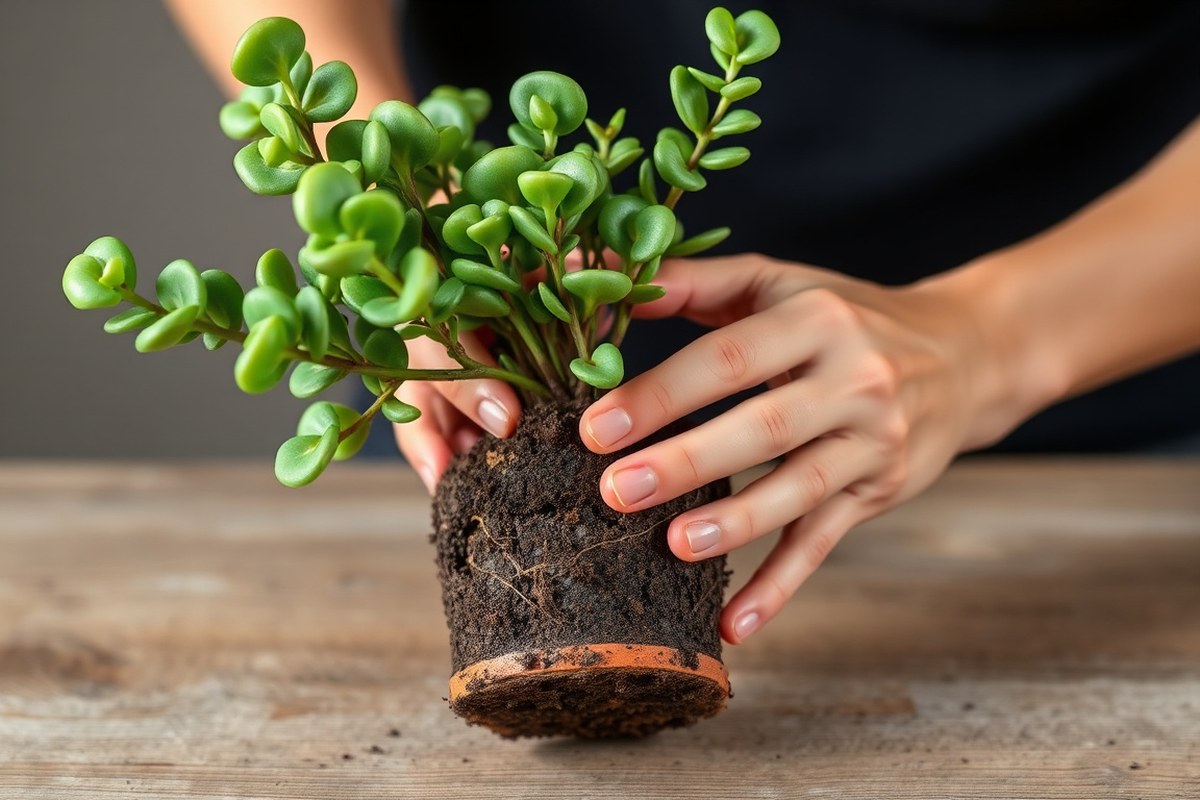
- Loosen the soil around the pot edges using a small tool or your fingers. Gently turn the pot upside down while supporting the plant’s base. Tap the pot’s sides if the plant stubbornly holds onto the soil.
- Slide the jade plant out of its old pot carefully. Avoid pulling on the stem to prevent damage. When roots are stuck, gently loosen the soil around them.
- Inspect the roots for any dark, mushy, or rotten sections. Trim those damaged roots with clean scissors to prevent spread of rot. Healthy roots look firm and white or light tan.
- Pick a new pot one size bigger. Fill it partly with fresh soil. Center the plant with roots spread evenly, gently loosening any tightly wound roots. Make sure the top of the root ball sits about an inch below the pot rim.
- Fill around the roots with soil, pressing lightly to remove air pockets. Avoid packing soil too tightly to allow good drainage. Leaving space at the top helps prevent water overflow after watering.
- Wait 5 to 7 days before watering to let roots settle in new soil. This rest period reduces transplant shock risk. Afterward, water lightly and monitor the plant over the next 1 to 3 months.
Handling jade plant roots carefully during transplant lowers stress and damage. Removing it by supporting the base and loosening soil gently prevents stem breakage. Trimming dead roots avoids rot spreading and keeps your plant healthy.
Using the right pot size and soil mix supports good root growth and drainage. Letting the plant settle before watering avoids excess moisture stress. This stepwise care keeps your jade plant strong and encourages vibrant growth for years.
When and Why to Transplant Your Jade Plant

Watch for signs like roots growing out of drainage holes or the plant toppling easily. Yellowing leaves or slowed growth also hint your jade needs a bigger pot.
Usually, repot your jade every two to three years. This keeps its roots healthy and comfortable.
Spring and early summer are best for transplanting. Jade plants grow actively then, so they recover faster from the move. Transplanting in colder months can stress the plant because growth slows down and wounds heal slowly.
Young jade plants may need moving more often, especially if they grow quickly. Put a small jade in a 6-inch pot once it’s 3 or 4 inches tall. Older jades don’t like frequent moves and do best with a stable home every few years.
Water your jade plant a few days before transplanting to ease the stress of moving.
Choosing the Best Pot and Soil Mix for Jade Plants
Choose a pot slightly bigger than the current one with good drainage. Use a soil mix that drains well to keep roots healthy. Both pot size and soil should match your jade plant’s size and age for best growth.
Pot Size and Material Options
Pick a pot 1 to 2 inches wider and deeper than the old one. Young jade plants need slightly bigger pots every 1-2 years to grow well. Older plants often don’t require bigger pots unless roots are crowded.
Terracotta pots work best because they’re heavy and let air in through their walls. Ceramic pots also suit jade plants if they have drainage holes. Plastic pots are lighter but don’t breathe like terracotta, so watch watering closely.
| Pot Material | Drainage | Best For |
|---|---|---|
| Terracotta | Good | All plant sizes; breathability slows soil moisture |
| Ceramic | Good | Young and mature plants |
| Plastic | Varies | Lightweight option; check for drainage holes |
Choose pot size by jade plant maturity. Small plants grow well in 4-6 inch pots. Large, old plants may need pots 8 inches or bigger, if they are root-bound.
Soil Mix Ingredients and Ratios
Use a soil mix that drains fast and holds some moisture. A DIY mix with 60% potting soil and 40% perlite or pumice works well. Perlite and pumice keep soil airy to avoid root rot.
You can also combine 50% cactus or succulent soil with 50% perlite or coarse sand. Avoid standard potting soil alone because it holds too much water. Adding compost or mulch is optional but helpful for nutrients.
| Soil Mix | Composition | Purpose |
|---|---|---|
| DIY Mix | 60% potting soil + 40% perlite/pumice | Good drainage with moisture retention |
| Succulent Mix | 50% cactus/succulent soil + 50% perlite or sand | Sharp drainage to prevent overwatering |
| Standard Potting Soil | 100% potting soil | Too water-retentive, not recommended alone |
Mix perlite or coarse sand to create air pockets. These pockets improve root health and less chance of soggy soil. Add top layer of small pebbles to reduce soil splash and evaporation if you want.
Drainage Requirements and Alternatives
Drainage holes prevent water buildup that causes root rot. Jade plants hate sitting in wet soil. Most pots sold for plants come with these holes for that reason.
Your pot has no holes. So add a two-inch layer of dry soil or gravel at the bottom.
You can use bonsai wire to cover holes and protect drainage. Watch water closely in these pots; water less often to avoid sogginess.
| Drainage Approach | When to Use | How to Manage |
|---|---|---|
| Drainage holes | Preferred in almost every pot | Water freely; excess escapes |
| No holes | Pot design or decor requires it sometimes. | Add 2 inches of dry soil or gravel; water sparingly |
| Bonsai wire + drainage holes | Protect drainage hole but allow flow | Wire covers hole; place soil above wire layer |
Place the plant so the root ball sits about an inch below the pot rim. It lets you water without overflow and protects roots. Check soil moisture after 7-10 days and water only when upper soil dries out.
Preparing Your Jade Plant and Workspace for Transplant
Water your jade plant deeply two days before transplanting to reduce stress. Avoid watering it right after repotting because it can lead to root rot. Let the soil dry slightly before you start working with the plant.
Gather the right tools and materials to make your job easier and cleaner. You’ll need a new pot with drainage holes and fresh succulent soil mix. Also, get a small hand trowel and gardening gloves ready.
Keep a clean cloth or soft brush nearby. Use it to clear dust and dirt from leaves and roots.
Set up your workspace in a well-lit area with easy access to water. Lay down newspaper or a plastic sheet to catch loose soil.
Use a flat surface at waist height to work. This helps prevent back strain when lifting your plant or pot.
- Water deeply but avoid soaking right before transplant
- Choose a pot just one or two sizes bigger than the current one
- Use well-draining soil with sand or perlite mixed in
- Wear gloves to protect your hands and reduce plant damage
- Cover your work area to simplify cleanup afterward
- Have a bowl of water nearby to soak the new pot’s bottom
- Keep a soft brush to clean roots gently if needed
Older or root-bound plants benefit from soaking the pot’s bottom half in water for 10 to 30 minutes. This softens the soil and protects roots when removing the plant. For younger plants, be very gentle with the roots to avoid damage.
Check that all your tools are clean to prevent infections. Avoid rushing to reduce stress on the plant and yourself. A calm pace lets you notice damaged roots or pests before potting up.
How to Care for Your Jade After Transplanting
Caring for your jade plant after transplanting means giving it a gentle restart. Water lightly right after repotting. Place it in bright, indirect light.
Watch for signs of transplant shock. This helps the plant settle in and start growing again.
Watering Schedule and Techniques
Right after you repot your jade plant, water it lightly with room-temperature water. Stop watering once it drains out the bottom to avoid soggy soil. Hold off on your usual watering routine.
Wait until you see new leaves or shoots. This usually takes 10 to 14 days.
For about a month, be extra careful with watering to avoid stress. After that, water only when the top half of the soil feels dry to the touch.
Overwatering can drown the roots and cause rot. So err on the side of dryness.
Only water if the soil’s dry halfway down the pot to prevent root rot.
Optimal Light and Temperature Settings
Keep your jade plant in a spot with bright, indirect sunlight for several days after transplanting. Avoid direct sun, which can scorch the leaves during this sensitive time. After a week, you can slowly move it into more direct light if needed.
Jade plants prefer temperatures between 65 and 75°F. Keep your plant away from drafts, heaters, or AC vents. Sudden temperature changes stress the plant.
Avoid these shifts to keep it healthy. Stable indoor conditions help your plant bounce back quickly.
Avoid direct sunlight and drafts to reduce stress on your freshly repotted jade.
Monitoring and Acting on Transplant Shock Signs
Look for droopy, shriveled, or discolored leaves early on, that’s transplant shock. The plant may stop growing or shed some leaves for a few days. Keep care steady and avoid extra watering to let it recover naturally.
Shock signs lasting more than two weeks need a check. Inspect soil moisture and root health carefully. Repotting error or too much water can worsen the problem.
In tough cases, trim dead leaves off your plant. Keep it in shade until new growth appears.
Transplant shock can last up to two weeks; be patient and gentle with care.
Common Transplanting Mistakes and How to Avoid Them
One common mistake is transplanting jade plants during cold months. They grow slower then and get stressed easily. Wait until spring or early summer, when temperatures stay above 60°F indoors.
Using a pot that’s too big also causes problems. Large pots hold excess soil, which stays wet longer and causes root rot. Choose a pot 2 inches wider than the old one for jade plants over 5 years.
Don’t pick a much larger pot. This helps avoid root problems.
Damage to roots is another frequent issue. Rough handling or pulling can break roots, slowing recovery.
Gently loosen the root ball with your fingers. Trim only the dead roots with clean scissors.
- Check soil moisture before watering; water only when the top 1/3 is dry.
- Use a well-draining succulent mix to avoid soggy roots.
- Place the jade in bright, indirect sunlight after transplanting for quick adjustment.
- Keep the plant away from cold drafts or heaters during recovery.
- Don’t fertilize for at least a month to let roots heal.
Overwatering is a common problem after transplanting. Watering too soon or too much leads to yellow, mushy leaves.
Cut back watering if the soil stays wet. Wait for the top two-thirds to dry out.
Shriveled leaves with yellow edges mean the plant lacks water. Water it when the soil’s top half feels dry. Regularly check with your finger to prevent underwatering.
Make sure your jade plant’s pot has drainage holes to help it thrive. Without them, excess water can harm the roots. This helps avoid root rot and stress.
Without proper drainage, water pools and causes root damage. Also, choose a heavier pot when transplanting large jade plants so it won’t tip over easily.
Propagation Options During Jade Plant Transplants
You can take cuttings while transplanting your jade plant to grow new ones. Use clean pruning shears and pick healthy stems. The right rooting medium helps cuttings develop roots safely before repotting them.
Taking and Preparing Cuttings
Choose healthy, firm stems about 3 to 4 inches long. Avoid stems with leaves showing damage or disease. Use clean pruning shears to avoid infections.
Cut just below a leaf joint and let cuttings dry for 1 to 3 days. This forms a callus that helps prevent rotting when planted. Clean cuttings have a better chance to root successfully.
- Wear gardening gloves to protect your hands and keep cuttings clean.
- Use sharp, clean pruning shears to cut stems from a mature jade plant.
- Select stems with several healthy leaves, about 3 to 4 inches long.
- Cut right below a leaf node to encourage root growth.
- Set cuttings aside in a dry spot for 1 to 3 days to callus.
- Optional: Dip cut ends into rooting hormone powder for better rooting.
Rooting Media Choices
Use well-draining media like coco peat, perlite, or cactus soil mix. These keep water from pooling and causing rot. Avoid regular potting soil, which can hold too much moisture.
Coco peat stays moist without sogginess, while perlite adds air space. Combine them or use a commercial succulent soil mix. This creates a balanced environment for root growth.
Keep the rooting medium warm, around 70 to 75°F, for best results. Place cuttings in indirect sunlight and avoid direct hot sun. These conditions help cuttings root in 3 to 4 weeks.
Caring for Rooted Cuttings Before Repotting
Wait until cuttings develop firm roots 1 to 2 inches long before repotting. This often takes about 3 to 4 weeks. Gently tug on the cutting to check for root resistance.
Use small pots with a well-draining succulent mix to avoid root rot. Water lightly when the soil starts to dry, but don’t overwater. Young jade plants grow slowly; patience helps.
Gradually increase sunlight exposure after repotting to toughen leaves. Avoid full sun at first to prevent leaf burn. Transplant young plants in spring for best growth.
Special Situations: Transplanting Large, Old, or Root-Bound Jade Plants
Handling a large or old jade plant needs extra care to avoid damage. These plants can have thick branches and several trunks. So support the main stems while moving them.
Use a sturdy potting bench or table to work at waist height. This helps prevent strain on you and the plant.
When removing a mature jade from its pot, don’t pull it by the stems or branches. Instead, gently loosen the soil around the edges. Use a blunt tool like a butter knife.
Work carefully so you don’t hurt the roots. Then carefully tilt the pot and slide out the root ball by supporting it from underneath. This keeps the fibrous roots intact and stops tears.
For root-bound jade plants, trim the roots lightly if they circle too much. Cut away any black, mushy roots showing signs of rot with clean scissors.
After trimming, let the roots air-dry for 30 minutes before repotting. This reduces the chance of more rot developing.
Choose a new pot about 1 to 2 inches wider. It should be just one size larger than the old pot. This helps the jade plant adjust better.
Bigger pots hold too much moist soil and cause root rot. Add a 1 to 2 inch layer of drained, gritty succulent soil at the bottom. Set the jade’s roots on this layer so the plant sits at its original soil level.
Fill around the root ball carefully with soil, pressing gently to remove air pockets. Avoid burying the stem deeper than before. Planting too deep invites stem rot.
Water the jade plant lightly right after repotting. Keep it in bright, indirect light for about a week.
This helps it recover without stress. This helps it recover without drying out too fast.
Never pull your jade plant by the stems when you repot. It can easily break or harm the roots.
Step-by-Step Action Plan to Transplant Your Jade Plant
Use this simple plan to move your jade plant with ease. It helps your plant adjust well in its new spot. Take your time and follow the steps carefully.
- Before you start: Gather a well-draining pot and cactus soil mix. Check the pot’s drainage holes to avoid standing water.
- Day 1: Carefully remove your jade plant from its old pot. Gently loosen the roots and trim any that look rotten or dead.
- On the first day, put fresh soil in the new pot’s base. Gently spread the jade plant’s roots before placing it inside. Make sure the roots fit naturally without bending.
- Day 1: Fill the pot with soil around the root ball. Press the soil lightly but don’t pack it too tight to keep air pockets.
- Day 1: Water the plant lightly. The soil should feel damp but not soaked to prevent root rot.
- Week 1: Keep your jade plant in bright, indirect light. Avoid direct sun to reduce transplant shock.
- Week 2: Resume normal watering. Water only when the top 1-2 inches of soil feel dry.
- After three weeks, watch for new leaves or stems growing. This shows your jade plant is doing well in its pot. Keep caring for it with light and water.
Frequently Asked Questions
How Often Should I Repot My Jade Plant?
Repot your jade plant every 2 to 3 years to refresh soil and space roots. This timing prevents root bound problems and promotes healthy growth.
Can I Use Any Soil to Transplant My Jade Plant?
Avoid regular garden soil; use a well-draining cactus or succulent mix instead. Proper soil mix stops root rot and keeps the plant happy.
Should I Prune My Jade Plant Before Transplanting?
Light pruning before transplanting helps reduce stress and encourages new growth. Trim damaged leaves or stems to make repotting easier and cleaner.
How Much Sunlight Does a Jade Plant Need After Transplanting?
Place your jade plant in bright, indirect sunlight after transplanting for recovery. Avoid direct harsh sun as it may cause leaf burn in sensitive plants.
Can I Fertilize My Jade Plant Right After Transplanting?
Wait at least a month before fertilizing your jade plant post-transplant. Fresh soil provides nutrients, and too soon feeding can stress the roots.
What Signs Show My Jade Plant Is Struggling After Transplanting?
Watch for droopy, yellowing leaves or slow growth as transplant shock signs. These symptoms usually improve with proper care over 1 to 3 months.
Key Points to Remember
Transplanting your jade plant carefully will help it grow healthy and strong. Take your time and watch for stress signs. Start by choosing the right pot and soil today to give your plant the best chance.