What Do Coconut Trees Look Like: A Complete Visual Guide to Their Features
What do coconut trees look like? They are tall palms with slender trunks and long leaves.
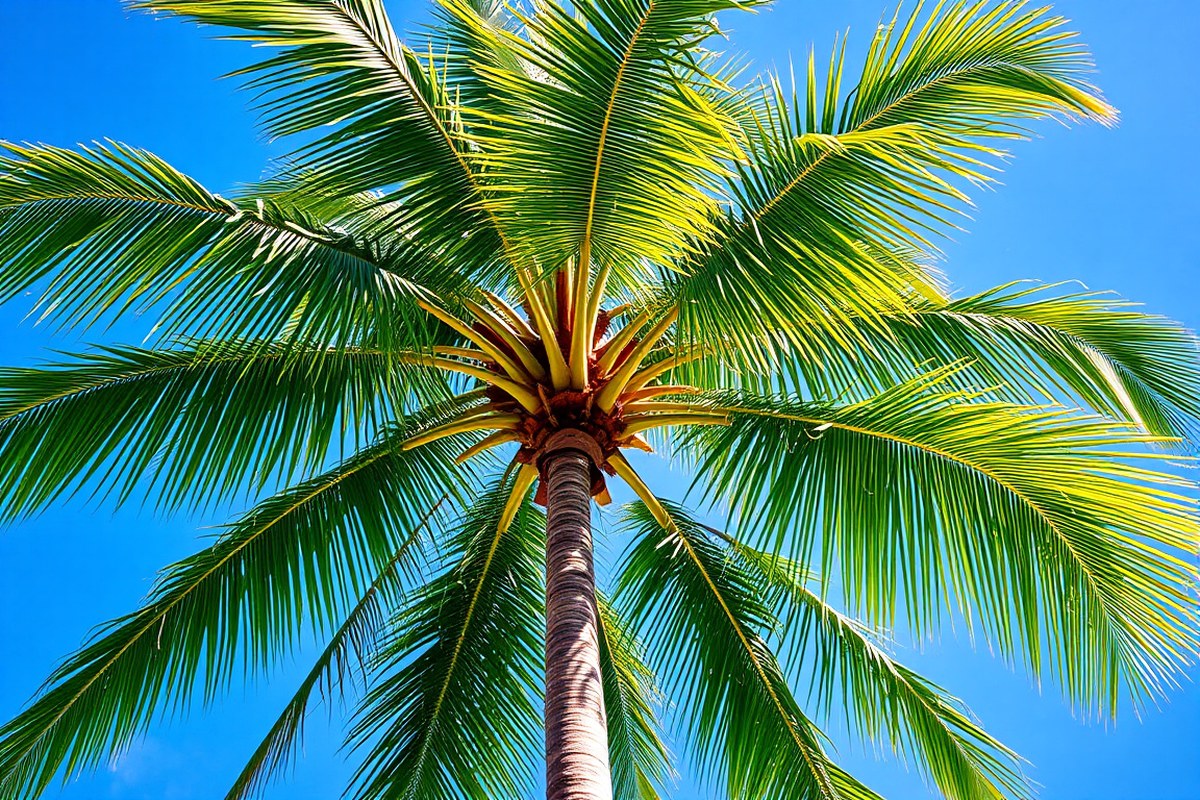
You usually spot their green, feather-like fronds towering high above the ground. Their bark is smooth and grayish, often showing ring patterns from old leaf scars.
These trees can grow very tall, some reach over 100 feet. Their trunks stay slim and slightly curved or leaning in some cases.
The leaves can get up to 20 feet long, making them easy to recognize. Watching for overall height and leaf shape helps identify coconut trees quickly.
Coconut trees thrive in warm, wet places. So they look healthiest where temperatures stay above 50 degrees year-round. Their roots spread wide but stay shallow, which keeps the tree stable in sandy soils.
Noticing the round or umbrella-shaped canopy also points to certain coconut varieties. This helps tell them apart from other palm trees at a glance.
Key Takeaways
- Full-size coconut trees can grow over 100 feet tall with slender trunks.
- Dwarf coconut trees stay shorter, usually between 20 and 40 feet tall.
- Coconut tree leaves are long and feather-shaped, sometimes 20 feet in length.
- Look for rounded or umbrella-shaped canopies to spot different tall varieties.
- They need warm temperatures above 50 degrees and plenty of rainfall to grow well.
- Trunks are generally slim and smooth compared to other palm trees.
What Does a Coconut Tree Look Like Overall?
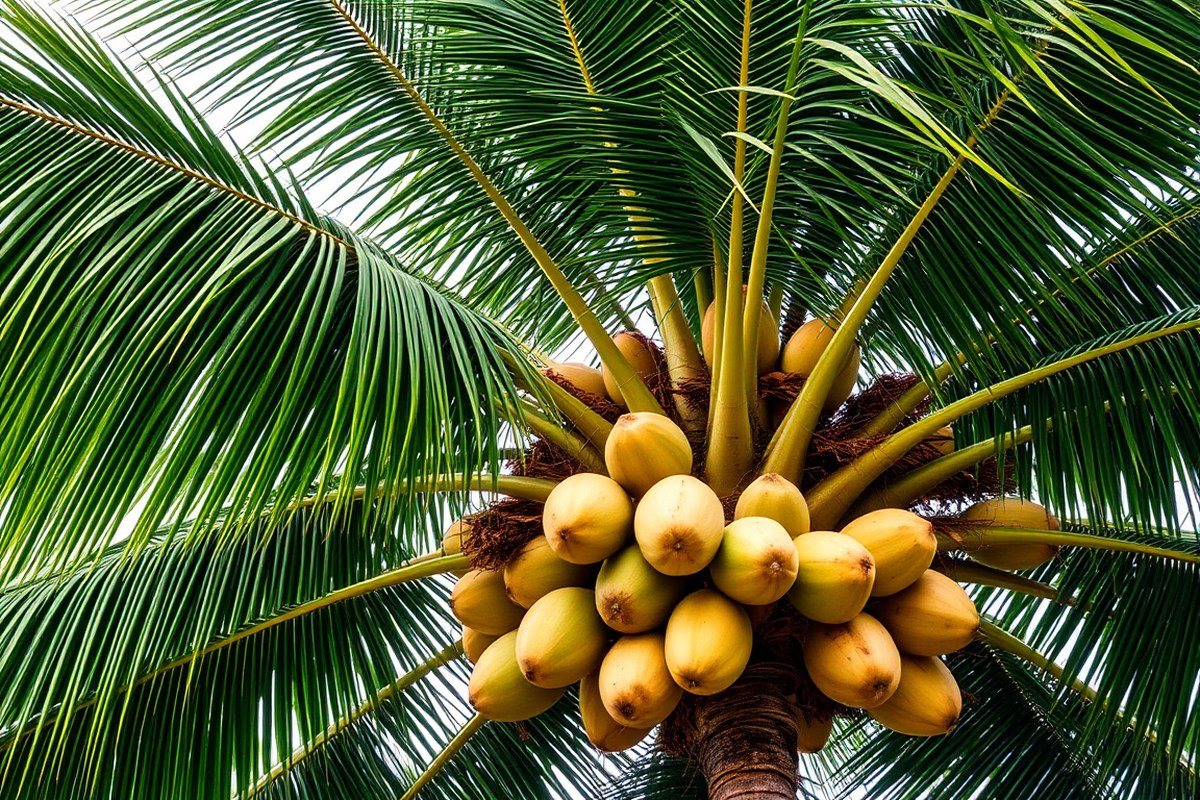
Coconut trees are tall palms with a slender, smooth trunk that often curves slightly. They usually reach between 50 and 80 feet tall, though some types grow shorter or taller. The trunk gets thinner as it goes up.
It ends in a round or umbrella-shaped crown. This crown has long, feathery leaves.
The leaves can be up to 20 feet long and look like large green feathers. This leaf shape sets coconut palms apart from other palms that often have wide, fan-shaped leaves. These fronds form a dense canopy that shades the top and sways gently in the breeze.
You can spot a coconut tree by its tall, single stem. It has a bunch of large coconuts hanging. The round coconuts have a rough and fibrous husk.
This husk looks different from date or coquito nuts. The tree looks slim but very tall. Its leafy crown stands out above most tropical trees.
Size depends on the type of coconut palm. Dwarf ones grow 20 to 40 feet tall. Tall types can reach 100 feet.
For example, East Coast Tall coconuts often get about 90 feet tall. You can tell the type by the canopy shape.
Panama Tall coconuts have umbrella-shaped tops. Some varieties have rounder tops.
A mature coconut palm looks like a natural tower. It has long leaves that arch at the top. The trunk usually feels smooth and has even color.
Sometimes faint rings show where old leaves were. The smooth trunk and tall height give it a classic look. The feathery crown adds to its tropical style.
How Tall Are Coconut Trees and What Affects Their Height?

Height Range of Tall and Dwarf Coconut Trees
Tall coconut trees typically grow between 50 and 100 feet. Some varieties, like the West Coast Tall, can reach the full 100 feet height. Dwarf coconut trees stay smaller, usually between 16 and 40 feet tall.
Dwarfs like the Malayan Yellow Dwarf reach about 30 to 60 feet. The Fiji Dwarf tops out near 25 feet.
These differences come from the tree’s genetic makeup and breeding adapted to local needs. Smaller trees tend to fruit earlier but produce fewer coconuts overall.
Climate and Soil Impact on Growth
Coconut trees thrive best in coastal tropical climates with warm temperatures and salty air. Such climates encourage earlier fruiting and larger, more consistent coconuts. Cooler or inland spots slow down growth.
Crops get smaller there. They mainly grow in wet months.
Good soil with loose sand or well-draining loam supports faster growth. Poor, compacted, or nutrient-deficient soil limits a tree’s height and fruit production. For backyard plantings, adding organic matter can improve soil and boost growth.
Age and Maximum Height
Coconut trees start bearing fruit between 4 and 6 years old. They focus on growing leaves and roots before fruiting heavily. The tallest a tree gets is around 15 to 20 years old.
This can change by variety. Growing conditions also play a role.
After reaching full height, the tree puts more energy into fruit production rather than growing taller. Taller, older trees maintain strong trunks and crowns of long fronds at the top. This balance helps the tree survive storms and keep producing coconuts.
Genetic Factors Influencing Height
Genetic traits control whether a tree grows tall or stays dwarf. Tall varieties have longer trunks and fronds, allowing them to reach higher sunlight. Dwarf varieties allocate more energy to early fruiting and compact size.
Some dwarf types have different leaf sizes and fruit shapes as well. For example, the Green Dwarf produces fruits that never fully ripen. Knowing the type helps you predict its growth pattern and garden fit.
How to Encourage Proper Growth Height
Plant coconut trees where they get full sun and have space to grow straight up. Avoid tight soil or places with poor drainage. Regular watering during dry spells supports steady growth, but overwatering hurts roots.
Fertilize with a balanced palm fertilizer, especially during the rainy season. Watch for pests or disease that can stunt growth. Maintain young trees by trimming dead fronds and protecting them from strong winds.
Growing tall coconut trees needs good sun, well-draining soil, and steady care in warm climates.
Distinctive Features of Coconut Tree Trunks
Coconut tree trunks are tall and slender. They often curve and feel smooth. Leaf scars show clearly along their length.
Their color ranges from light gray to brown, showing their age and health. These trunk features help you identify a coconut tree easily in most landscapes.
Shape and Curvature of the Trunk
The trunk of a coconut tree is slim and column-like. It usually has a slight lean or curve, especially as the tree grows taller. The lean helps the palm reduce wind resistance and reach sunlight more effectively.
The trunk remains unbranched, supporting a tall crown of leaves at the top. This tall, slender shape makes it distinct from many other palm varieties.
Texture and Leaf Scar Patterns
Look closely at the trunk’s surface to see ringed scars. These are the marks left by fallen palm fronds. Each scar shows a stage in the tree’s growth, like a natural record of its history.
The texture often feels smooth but has slightly rough lines where the leaf scars remain. Older trunks show more regular and clear scars. Younger trunks have fewer and smaller marks.
Color Variations on the Trunk
Coconut tree trunks range in color from silver-gray to brown. The shade depends on the tree’s age and environment. Younger trunks are usually lighter and smoother, while older ones get darker and rougher.
The color also helps the tree protect itself from sun damage. The grayish tones reflect sunlight, reducing heat stress in hot climates.
Typical Size and Thickness
Most coconut tree trunks are about 12 to 24 inches thick at the base. The thickness remains fairly uniform along the trunk’s length. The total trunk height varies widely but usually feels slender compared to its height.
The slender trunk holds a heavy crown of leaves. It also carries the weight of coconuts.
The inside fibers make it strong enough. Despite looking fragile, the trunk is quite flexible and tough.
Changes in Trunk Appearance over Time
As coconut trees age, their trunks develop a more pronounced lean and stronger scars. A young tree’s trunk looks smoother and straighter. After about 10 years, scars get deeper and the trunk darkens.
Older coconut palms may have kinked or curved trunks due to wind and growth habits. These features reveal the tree’s environment.
They also help estimate its age by sight. You can learn about its life from them.
How to Recognize Coconut Tree Leaves and Fronds
The leaves of a coconut tree are large and feather-shaped, known as pinnate fronds. They typically grow between 13 and 20 feet long, with about 200 individual leaflets. Each leaflet can grow up to 2 feet long.
This makes the whole leaf look wide and light. It gives the leaf an airy appearance.
Pinnate means the leaflets are arranged along both sides of a central stem, like a feather. Coconut fronds have a unique shape. This shape makes them stand out from other palms.
Other palms may have fan-shaped or costapalmate leaves. Coconut fronds spread out at the tree’s top.
They form a rounded crown shape. This shape shows the tree’s silhouette.
The crown usually holds 25 to 30 of these fronds, creating a lush, somewhat open canopy. The long leaflets catch sunlight well. They also let wind flow through easily.
This prevents storm damage. The base of each frond’s stem is smooth.
It wraps around the trunk like a ring. This helps you identify a coconut palm.
- Fronds can reach lengths of 18 feet. They grow as wide as 6 feet. These large fronds create a bold look.
- Each frond has about 200 leaflets, each around 2 feet long
- Leaves are pinnate, with leaflets arranged like a feather
- The crown contains 25 to 30 fronds forming a rounded shape
- Leaf bases attach smoothly to the trunk in ringed patterns
- Pinnate fronds differ from fan-shaped or costapalmate palm leaves
Spotting these features can help you identify a coconut palm quickly. Look for the airy crown of long feather-like leaves along with the ringed trunk. Coconut palms have big pinnate fronds.
They look different from smaller palm leaves. Other palms may arrange leaves in other ways. This leaf structure supports the coconut palm’s graceful shape and tropical look.
Identifying Coconut Fruits: Size, Shape, and Growth Stages
Coconut fruits are round to oval and can grow quite large. They usually measure 6 to 12 inches long and 4 to 8 inches wide. Their size depends on the tree variety and growing conditions.
The coconuts start small and green on the tree. As they mature, their outer green shell hardens and thickens. Inside, the coconut water fills up before the inner white meat develops fully.
Each mature coconut tree typically grows about 30 fruits yearly. These coconuts usually appear in clusters ranging from 6 to 12 fruits. A healthy tree keeps fruits on it for months, making identification easier.
The coconut fruit changes visibly in four main stages. These stages reflect the size, shell hardness, water content, and meat thickness. Knowing these helps you tell if a coconut is ready to harvest or still developing.
- Observe small, green coconuts hanging near the tree crown. These are immature fruits filled mostly with thin coconut water.
- Watch for coconuts growing larger, 8 to 10 inches long, with a thick green outer shell. Water inside increases at this stage.
- Notice the shell surface turning rougher and fruits becoming heavier. The white coconut meat begins to develop inside.
- Look for brownish outer husks once the fruit fully ripens. By this stage, the coconut water reduces, and the meat thickens.
- Check clusters regularly. A mature coconut tree often holds several fruit clusters, each with a dozen or more coconuts.
- Count fruits on a cluster to estimate total production. Most trees keep at least 6 to 12 coconuts per cluster.
| Stage | Appearance | Size (inches) | Water Content | Coconut Meat |
|---|---|---|---|---|
| Immature | Small, bright green, smooth shell | 3 – 6 | High, thin water | Thin layer |
| Developing | Larger, deep green, thicker shell | 6 – 10 | Increasing, thicker water | Developing |
| Mature | Rough, green to yellow-green shell | 8 – 12 | Moderate, sweet water | Thickening meat |
| Ripe | Brown, fibrous outer shell | 8 – 12 | Reduced water | Thick, firm meat |
Keep an eye on coconuts that stay green too long. They may be unhealthy or not fully mature yet.
Common Coconut Tree Varieties and Their Visual Differences
Coconut trees come in various varieties, mainly tall and dwarf types. You can tell them apart by their size, trunk shape, and leaves. Some popular types are King, Malayan, Jamaican Tall, and Macapuno coconuts.
Tall Coconut Varieties Overview
Tall coconut trees often grow above 60 feet and can reach up to 100 feet. They usually have a crooked trunk with a swollen base, called a bole. The Jamaican Tall has a swollen bole near its base.
It thins as it goes up. This shape sets it apart from other tall types.
One example is the Jamaican Tall coconut. Its trunk looks crooked and has a thick base. The Panama Tall has a narrower bole than the Jamaican Tall.
It also has a crooked trunk. But overall, it is thicker.
Dwarf Coconut Varieties Overview
Dwarf coconuts rarely grow taller than 40 feet. The Malayan Green Dwarf grows about 30 to 40 feet tall. It has a narrow, straight trunk.
It does not have a swollen bole. Macapuno coconuts grow even smaller, staying under 16 feet, making them easy to spot.
Dwarf varieties tend to have straight trunks unlike the tall ones. They don’t have the swollen base at all. Their leaves might be shorter and the palms look more compact.
Hybrid and Specialized Types
Hybrid coconut trees combine traits from tall and dwarf types. They often grow medium-sized with strong trunks.
Macapuno coconuts are special because their fruit have unique flesh. But externally they look like regular coconuts.
You can’t identify Macapuno coconuts by looking at the fruit. Instead, look at the tree size.
Macapuno trees are smaller than others. These trees are typically less than 16 feet tall, fitting more into the dwarf category.
Here’s a table to help compare the main coconut varieties by height, trunk, and fruit traits:
| Variety | Height | Trunk Type | Swollen Bole? | Fruit Traits |
|---|---|---|---|---|
| Jamaican Tall | Up to 100 ft | Crooked | Yes, distinct at base | Large coconuts, normal appearance |
| Malayan Green Dwarf | 30, 40 ft | Straight, narrow | No | Normal-sized coconuts |
| Macapuno Coconut | Up to 16 ft | Straight, skinny | No | Normal external fruit, special flesh |
This table helps you see clear differences in size and trunk shape. You’ll notice tall trees are much larger and usually have the swollen bole. Dwarf types are shorter with straight trunks and lack this feature.
How Coconut Tree Appearance Changes over Time
Young coconut trees begin as thin seedlings with a small stem and only a few leaves. Their leaves look soft and narrow compared to mature fronds.
At this stage, the crown is very small and near the ground. The tree looks short and fragile.
The trunk starts smooth and greenish, without the rough texture seen in older palms. As the tree grows older, the trunk gets thicker. Its bark turns coarse and brownish-grey.
The bark grows fibrous ridges. It also shows scars from old leaf bases. This makes the trunk look rugged.
Leaf growth also changes over time. Young palms usually produce about 10 to 15 fronds. Mature trees develop 30 to 40 large, graceful fronds that extend up to 18 feet long.
The crown grows bigger as leaves spread out. It forms a full canopy shape. This canopy shades the base.
Coconut trees take different amounts of time to start fruiting based on their variety. Tall varieties often need 6 to 10 years to flower and bear nuts. Dwarf varieties start earlier, typically in 3 to 5 years.
Flowering delays occur in colder areas. These places drop below 68 °F (20 °C) during the day.
In the first years, the tree grows leaves and trunk length. It does not yet focus on fruit. When the tree is about 20 feet tall, it starts sending flower stalks.
These come out near the crown. These come with both male and female flowers, which lead to nut development.
Temperature influences growth rates too. Daytime highs below 68 °F slow leaf growth. The trunk also thickens slower.
Young palms are especially vulnerable to cold. Frost can kill them, causing the tree’s appearance to stay stunted or weak-looking.
The tree goes from seedling to mature. It has a taller trunk, bigger crown, and many wide leaves.
This slow process takes several years. The tree’s look reveals how healthy and well-adapted it is to its environment.
How to Tell a Coconut Tree from Other Palm Trees
Coconut trees stand apart from other palms mainly by their unique trunk and leaf features. Their trunks are slender and smooth. They are slightly curved.
They usually don’t have rough, shaggy bark like many palms. The trunk often looks grayish.
It leans gently to one side. This makes it stand out among straight palms.
Their leaves grow in a crown at the top, forming a large, feather-like arrangement. Each leaf is long and arching, with narrow leaflets spreading from a central stem. This shape differs from some palms where leaves are shorter or fan-like.
Look closely for fibrous leaf sheaths if the tree has no fruit. These sheaths wrap around the leaf bases on the trunk.
The clearest sign is the presence of coconut fruits, which hang in clusters below the leaves. These fruits are round or oval with a roughly 6 to 12-inch size range. Seeing these fruits means you have found a coconut tree.
Coconut palms produce both male and female flowers in the same cluster. But fruits are easier to spot.
- Smooth, slightly curved gray trunk without rough bark
- Long, feather-shaped leaves with narrow leaflets
- Fibrous, cloth-like leaf sheaths at leaf bases when no fruit
- Clusters of large, round or oval coconut fruits below leaves
- No crown shaft present, unlike some other palm types
- Dwarf varieties are shorter and stockier than tall kinds
These points help you identify coconut palms accurately in your garden or local area. Palms without these features are likely other species, sometimes with fan-shaped leaves or rough, thicker trunks. Spotting the fruits or their sheaths is usually the quickest way to tell these trees apart.
Check leaf bases for fibrous sheaths if no coconuts are visible; it aids identification.
Step-by-Step Action Plan for Identifying and Understanding Coconut Trees
Follow these steps to spot and learn about coconut trees easily. You’ll know you’re on the right track by identifying their key features.
- Day 1: Look for tall, slender trunks that lean slightly. Check if the trunk has rings from old leaf scars.
- Day 3: Observe the leaves. Coconut trees have long, feathery fronds that can reach up to 15 feet.
- Week 1: Find coconuts hanging in clusters near the top of the tree. Notice their shape and size differences.
- Week 2: Compare nearby palm trees. Coconut tree leaves are thinner and more flexible than many other palms.
- Month 1: Check the tree’s height and overall shape. Record any changes if you’re growing one yourself.
- Month 3: Identify the coconut tree variety by leaf color and nut size. Some types have taller trunks or different fruit shapes.
- Ongoing: Watch how the tree changes from seedling to mature size. Note frond and trunk growth patterns.
Frequently Asked Questions
How Can You Identify a Young Coconut Tree Compared to a Mature One?
Young coconut trees have leaves that are still whole and unopened. Mature trees have fully split fronds. These fronds grow up to 20 feet long.
Do Coconut Trees Have Different Root Systems from Other Palms?
Yes, coconut trees have an intricate root system with many fibrous roots. These roots spread widely but stay relatively shallow compared to other palm species.
What Colors Do Coconut Tree Trunks Typically Show?
Coconut tree trunks usually show gray to light brown colors. You might see rough textures and ring-like scars where old leaves have fallen off.
Are Coconut Tree Fronds Always Feather-Shaped?
Most coconut tree fronds are long and feather-shaped. This sets them apart from palms with fan-shaped leaves, which tend to be shorter and rounder.
How Do Environmental Conditions Change Coconut Tree Appearances?
Trees in drier or cooler spots tend to be shorter with thinner trunks. Rainfall and temperature affect leaf size and fruit production noticeably.
Can the Shape of Coconut Fruit Shells Vary by Coconut Tree Type?
Yes, coconut shells differ by variety, some are round, others slightly elongated. The shell texture can also range from smooth to more fibrous.
Before You Go
Seeing coconut trees in your area is easier when you know what to look for. Start by recognizing their slender trunks and feathery leaves. Take a walk and try identifying one today to get familiar with their look.