What Is a Pergola vs Gazebo: A Complete Comparison for Your Outdoor Space
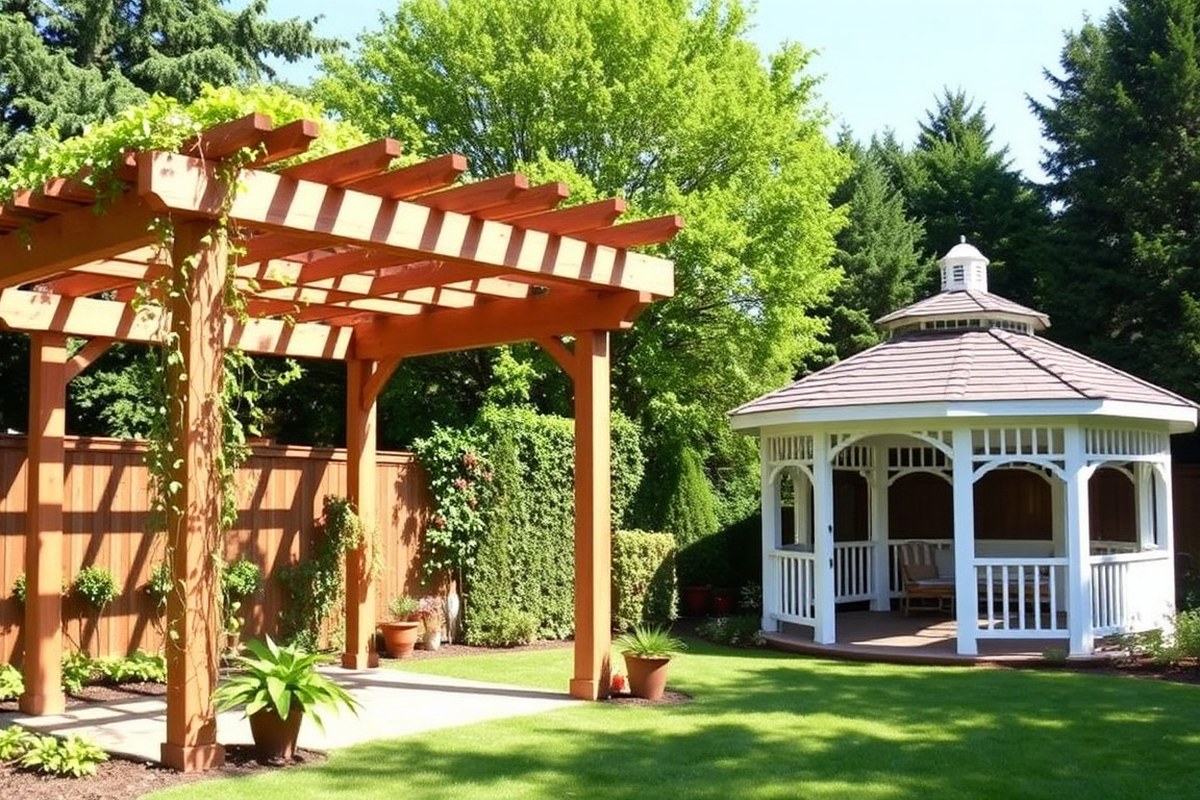
A pergola has an open roof made of beams or lattice. It lets sunlight and air flow through while giving partial shade. This keeps your outdoor space bright but cool.
A gazebo has a fully covered roof and often enclosed walls. It offers more shade and protection from rain or sun. Gazebos usually have peaked roofs and feel more solid.
Pergolas typically feel lighter and fit well in gardens or patios. Gazebos are heavier and provide better shelter. Your choice depends on how much shelter you need and your style.
Consider your space size and shade needs before choosing. Pergolas can often be DIY projects. Gazebos usually require professional installation and more upkeep depending on materials.
Key Takeaways
- A basic wood pergola costs about 30-50% less than a similar wood gazebo.
- Gazebos need professional installation because of complex framing and roofing.
- Wood pergolas and gazebos require staining or sealing every 2-3 years.
- Metal pergolas or gazebos last 15-25 years with little upkeep.
- Pergolas block around 70% of direct sunlight with lattice tops.
- Gazebo roofs face more wind, needing yearly fastener and flashing checks.
What Is a Pergola and What Is a Gazebo?

A pergola is an outdoor structure with an open framework of beams or slats. It often has no solid roof, creating partial shade with dappled sunlight. You can attach a pergola to a building.
It can also stand alone. Pergolas support climbing plants or hanging lights.
A gazebo is always freestanding and features a fully roofed, often octagonal or round shape. Its solid roof provides full protection from sun and rain. Gazebos usually have open sides, making them a sheltered spot for dining or relaxing outdoors.
Per pergola’s slatted roof offers partial shade and airflow. Some models include retractable covers or motorized louvers for adjustable sun protection. A gazebo has a solid roof.
It is made to handle all weather. This includes rain and snow.
The basic structure of a pergola is simpler and often less expensive than a gazebo. A wood pergola costs about $2,000 to $8,000.
A wood gazebo runs $3,000 to $10,000. Gazebo roofs carry more wind load, needing yearly fastening checks to stay secure.
Both structures define outdoor living areas, but their design and function vary. Pergolas create a flexible, open-air zone blending with gardens or patios. Gazebos act as a focal point, offering a stable, fully sheltered place for gatherings.
How Pergolas and Gazebos Differ in Design and Function

Pergolas and gazebos have clear design and function differences. Pergolas usually have open, slatted roofs and can attach to your home or stand alone. Gazebos always have solid, enclosed roofs and are freestanding structures, often with polygonal shapes.
Structural Elements: Attachment and Shape
Pergolas can be attached to your house, garage, or a wall. Attaching a pergola helps expand your outdoor living area smooth. Gazebos always stand alone and don’t attach to buildings, serving as garden or yard focal points.
Pergolas often come in rectangular or square shapes. This makes them good for patios and pool decks.
Gazebos are usually octagonal, hexagonal, or round. Some square versions exist, but polygonal shapes are the classic look.
Roof Design and Coverage
Pergolas have open roofs made of rafters or slats. Some models have adjustable louvers to control sunlight or retractable shades for extra shade. This design lets airflow flow freely but offers only partial protection from rain.
Gazebos have fully enclosed solid roofs that protect from sun and rain. Their roofs often have a peaked design similar to a small house. This solid cover makes gazebos suitable for sitting during rain and gives better privacy.
Open vs. Enclosed Sides
Pergolas have open sides that allow quick airflow and view of your yard. You can add climbing plants or curtains, but mostly they stay open. Gazebos usually have open or screened sides, sometimes with railings around them.
Screened gazebos keep bugs out while letting air in, which is great for evening use. Pergolas don’t block insects or strong winds.
They look open and let you feel closer to nature. You get light shade without full shelter.
Sizes and Typical Uses
Pergolas come in different sizes and can cover long spaces. They work well for outdoor kitchens. They also fit extended patios nicely.
Their rectangular shape fits well alongside houses and decks. Gazebos usually have smaller footprints with 6 to 8 sides, offering a cozy, standalone space.
People use pergolas mainly for shade. They soften sunlight on terraces and pool decks. You’ll find them over garden seating spots too.
Gazebos serve as standalone garden spots or backyard hangouts. They protect you from rain every time. You can count on dry shelter under them.
Consider roof material and shape for your climate, gazebo roofs shield from rain. But pergolas let in airflow for dry, sunny areas.
Materials Used for Pergolas and Gazebos and Their Durability
Wood is a common choice for both pergolas and gazebos. It offers a warm, natural look and is easy to customize with paint or stain. Untreated wood needs regular upkeep.
It can last 10 to 20 years. Proper care helps it stay in good shape.
Vinyl and aluminum are popular for pergolas because they resist weather and need less upkeep. Vinyl structures can last over 20 years with minimal care.
Aluminum can last 15 to 25 years. Aluminum is lightweight and rust-resistant but may feel hot in direct sunlight.
Gazebos often use wood, vinyl, or metal too. But they usually have more complex roofs, so material costs and maintenance needs rise. Metal gazebos handle weather well.
Aluminum and steel last longer. They cost more and dent easier. Vinyl gazebos are low-maintenance but heavier and cost more than other options.
Fiberglass is another material for gazebos though less common. It lasts long and resists pests and weather but often costs the most.
Repairs can be tricky, and style options are limited. This option suits those looking for durable, low-maintenance structures without needing frequent touch-ups.
Clean, sand, and seal wood pergolas every 2 to 3 years. This keeps them looking good. Regular care prevents damage.
Vinyl or metal needs washing once or twice a year to remove dirt and prevent buildup. Avoid abrasive cleaners on vinyl and metal to protect coatings and keep colors vibrant.
Your choice depends on budget and look. Consider how much upkeep you want. Different materials need different care.
Wood gives a classic feel but demands more care. Vinyl and metal cost more upfront but pay off with simpler maintenance and longer life. Wood maintenance usually costs $50 to $150 per session.
Vinyl or metal costs are lower. Keep that in mind for budget.
Cost and Installation Complexity Compared Between Pergolas and Gazebos
Costs for pergolas generally run lower than gazebos because pergolas use fewer materials. Expect a basic pergola kit to cost between $1,000 and $3,000 depending on size and material. Gazebos often start around $2,000 and can go above $10,000 for larger or custom builds.
Installing a pergola is simpler. It usually involves an open frame fixed to your ground or deck.
Gazebos have peaked roofs, walls, and sometimes flooring, which require more skill and time. This complexity often calls for professionals, especially for large or permanent gazebos.
Many homeowners build pergolas themselves using kits or simple plans. DIY pergolas save money but need patience and some basic tools.
Gazebo kits exist but are less DIY-friendly. Professional help is often needed to meet local codes and secure permits.
| Factor | Pergola | Gazebo |
|---|---|---|
| Shade | Partial | Full |
| Weather Protection | Minimal | Significant |
| Use | Aesthetic, plant support, space definition | Relaxation, entertainment, focal point |
| Budget | Lower ($1,000-$3,000) | Higher ($2,000-$10,000+) |
| Installation Difficulty | Easier (DIY friendly) | More difficult (professional recommended) |
| DIY Options | Many kits and plans available | Fewer kits, more complex assembly |
| Typical Features | Open roof, sometimes no floor | Roofed, often with floor and seating |
Keep in mind, your choice can affect installation time. A pergola might take a weekend DIY with common tools.
A gazebo installation could take several days plus inspections or permits. Hiring pros adds cost but improves safety and quality.
In some cases, adding a built floor for a pergola raises its price, approaching gazebo costs. If you want full protection from rain or wind, the gazebo’s complexity and price are worth it. Otherwise, a pergola offers easier installation and a lighter budget.
Choosing the Right Structure for Your Space and Needs
Deciding between a pergola or a freestanding gazebo depends on your yard. It also depends on how you want to use the space. Consider both before choosing.
Pergolas usually attach to a house or patio. They fit small to medium yards well. Sizes are around 8-by-10 to 12-by-14 feet.
Gazebos stand alone and need space on all sides. They look best in open yards. Sizes start at about 10-by-12 feet or larger.
Think about climate too. Pergolas have open slats that let air flow freely, which is great for hot, humid areas. Gazebos provide solid roof cover that blocks sun and rain, offering better shelter but less breeze.
Living in a rainy area means a gazebo is better. It gives more rain protection.
This helps you enjoy the space more. For warm, sunny spots where light matters, a pergola’s style lets you enjoy filtered sunlight.
Consider how you plan to use the structure. A pergola suits casual seating or growing vines because it feels airy and stylish. Gazebos work well for dining areas, outdoor lounges, or places where you want shade and privacy.
You also need to factor in budget and installation time. A wood pergola costs $2,000 to $6,000 for medium sizes. Gazebos can run $5,000 to $9,000 or more, with extra fees for pro installation.
- Attach pergolas for smaller patios or shade near your home
- Pick freestanding gazebos for larger yards and distinct sitting areas
- Choose pergolas to maximize airflow in warm, humid climates
- Use gazebos for better weather protection and rain shelter
- Consider pergolas if you want natural light and outdoor plants
- Opt for gazebos for covered dining or relaxing spaces
- Match length and width to usable yard space, at least 8-by-10 feet
Make sure your yard layout allows space around a gazebo for easy access and cleaning.
Plan your style preferences carefully. Pergolas often look more modern and sleek. Gazebos bring a traditional or cottage feel.
Wood and vinyl fits either structure but affect costs and upkeep. Always measure your available space before picking the structure type. So it fits comfortably without crowding plants or walkways.
Popular Design Styles and Customization Options
Pergolas and gazebos offer different design styles with plenty of options for customization. Pergolas often have a minimalist look with open roofs.
Gazebos present more traditional or elaborate styles. Both can include features like lighting, curtains, and integrated seating to fit your outdoor space.
Modern Pergola Designs
Pergolas usually feature sleek, clean lines ideal for contemporary gardens. Their open framework allows sunlight and air to flow freely, creating an inviting outdoor room. Many modern pergolas incorporate retractable canopies or adjustable louvered roofs to provide shade on demand.
These roofing options let you control how much sun you get throughout the day. A typical louvered roof can be opened or closed with a switch.
Retractable canopies slide or fold away manually or by motor. Both add flexibility without sacrificing the pergola’s airy feel.
Traditional and Contemporary Gazebos
Gazebos come in styles ranging from classic Victorian to simple modern shapes. Their roofs are fully or partly enclosed. They block rain and sun.
This makes them stronger than pergolas. Common roof types are peak, hip, and slope.
Each one gives a unique look. They shape the yard’s outline.
Many gazebos have built-in benches or seating areas, making them perfect for relaxing in comfort. Some feature screened-in sides or curtains to block bugs and provide privacy. These details add coziness and keep the space usable in varying weather.
Custom Features and Accessories
Both pergolas and gazebos offer many ways to personalize your outdoor structure. Adding lights sets the mood for evening gatherings. Curtains or screens can give you privacy and shade.
- Retractable or fixed canopy roofs
- Built-in seating or freestanding furniture
- String or recessed lighting options
- Outdoor curtains or privacy screens
- Heaters for cooler seasons
- Ceiling fans for air circulation
- Integrated sound systems or speakers
Picking the right accessories depends on how you plan to use the space and your budget. Small additions might only cost a few hundred dollars. Fully customized structures with heating and lighting can reach $5,000 or more.
Integration with Landscaping
Infusing your pergola or gazebo into your garden makes the entire yard feel more connected. Surrounding the structure with climbing plants, shrubs, or pathways softens hard edges. This landscaping blends the structure naturally into your outdoor space.
Consider trailing vines like wisteria or clematis on a pergola for shade and color. For gazebos, flower beds or potted plants can add beauty and privacy. Paths lead up to the structure.
They welcome visitors inside. They mark the spot for relaxing or entertaining.
Maintenance Challenges and Lifespan Expectations
Pergolas and gazebos both need regular upkeep to last many years. You should expect yearly checks, basic cleaning, and some repairs. Weather and material type affect how often you must maintain or replace parts.
Routine Maintenance Tasks
Check your structure every spring and fall for dirt, damage, or wear. Sweep off leaves and debris to prevent staining or rot. Clean surfaces with mild soap and water, then rinse well.
Look closely at joints and fasteners. Tighten screws or bolts to keep the frame stable. Apply a fresh coat of paint or stain every 2 to 3 years, especially for wood.
- Inspect seams and joints for looseness or cracks
- Clean roof panels or lattice to remove mold or mildew
- Check for insect damage, such as termite tunnels in wooden parts
- Clear gutters or drainage around gazebos if applicable
- Test doors, screens, and shutters for smooth operation
- Apply sealant on wood to resist moisture
- Touch up scratches or chips on painted or stained surfaces
Following this routine keeps your outdoor structure strong and looking fresh. Neglect accelerates wear and increases repair costs.
Weather-Related Repairs
Wind, rain, snow, and sun cause different damage types over time. Wood can warp, crack, or rot if moisture seeps in fast. Metal may rust or corrode if paint and sealants fail.
Look for missing shingles or damaged roofing panels on gazebos after storms. Replace them promptly to prevent leaks. Tighten or replace loose roof supports if you spot sagging or bends.
Snow buildup is a heavy load risk for both types. Remove extra snow to avoid structural strain or collapse. Also, check for sun fading and reseal surfaces to protect from UV damage.
Material-Specific Care Tips
Wood pergolas and gazebos last about 10 to 15 years with regular care. Pressure-treated wood needs sealing every year to block water and pests. Cedar and redwood resist decay but still benefit from annual oiling.
Aluminum and vinyl options require less work but should be washed twice a year. These materials don’t rot or rust but can crack or discolor over time. Avoid abrasive cleaners that scratch surfaces.
Metal structures need rust checks and touch-ups on paint chips to block corrosion. Check any fabric covers, like gazebo canopies, for tears or mold. Replace or clean them seasonally to keep the area dry and inviting.
Avoiding Common Mistakes When Selecting and Building
Ignoring local building permits is a common mistake. Many homeowners skip this step but end up facing fines or having to dismantle the structure. Your best move is to check your city or county building codes right away.
Gazebos and pavilions often require permits since they count as outbuildings. Pergolas might not, but it’s safer to confirm before starting.
Budgeting often falls short, especially if you underestimate upkeep costs. Wooden pergolas or gazebos need sealing or staining every two to three years. This maintenance can cost between $200 and $500 each time.
Most wood needs this to stay protected and looking good. Don’t forget to add these recurring expenses to your initial purchase and installation cost.
For example, a basic wooden pergola kit can start around $1,500. But a matching gazebo can be 30-50% more expensive.
Placement errors can spoil your enjoyment and the structure’s usefulness. Choose a spot that balances sun protection and views without blocking doors or pathways. Avoid locations prone to heavy wind or poor drainage, as these quickly cause wear.
Think about the shade and sunlight you want all day. Place your pergola or gazebo where it matches your needs. This helps you enjoy your outdoor space better.
- Check local building codes for permit requirements first
- Set aside $200-$500 every 2-3 years for maintenance
- Choose durable, weather-appropriate materials
- Install in a level, drain-friendly location
- Avoid cramped or obstructed spots in your yard
- Plan electrical or plumbing needs early if applicable
Confirm permits before buying materials or scheduling installation to avoid costly delays.
Step-by-Step Action Plan for Adding a Pergola or Gazebo
Follow these steps to pick and set up your outdoor structure. This helps you avoid common mistakes and get the most use.
- Before you start: Measure your outdoor space to know what fits. A proper fit means you won’t overcrowd or waste space.
- Week 1: Decide the purpose, shade, entertaining, décor, or all three. Your choice guides the style and size to pick.
- Week 2: Choose between pergola or gazebo based on design and function preferences. You’ll know this works when you can picture your outdoor life with it.
- Week 3: Pick materials that suit your budget and climate. Test this by reading reviews or visiting local stores for feels and looks.
- Week 4: Plan installation: DIY or hire a pro. A clear plan fits your skills and timeline, reducing surprises.
- After installation: Seal or paint the structure if needed to protect it. Check the finish after a week to confirm coverage.
- First season: Observe how the structure holds up against weather and use. Fix any small issues promptly to extend its life.
- Ongoing: Schedule regular maintenance, like cleaning and tightening bolts. It shows up when the structure remains sturdy and fresh.
Frequently Asked Questions
Can a Pergola Provide Full Rain Protection Like a Gazebo?
No, pergolas offer only partial shade and minimal rain protection. Gazebos have solid roofs that shelter from rain and sun, making them better for all-weather use.
Is It Common to Find Pergolas with Built-In Seating?
Most pergolas do not come with built-in seating. Gazebos usually have solid roofs to protect from sun and rain.
They provide a cozy space for friends and family to gather. Pergolas have open roofs to support climbing plants and allow sunlight.
Can I Attach a Pergola to the Side of My House?
Pergolas might stand alone or connect to your home. Connecting one saves space and links indoors to outdoors. Gazebos tend to stand on their own in the yard.
How Much More Does Professional Installation Cost for a Gazebo Compared to a Pergola?
Professional installation of gazebos typically costs 30-50% more than pergolas. Their complex roofs and framing increase labor time and material handling.
Are Vinyl Pergolas Easier to Maintain Than Wooden Ones?
Yes, vinyl pergolas require less upkeep than wood. Wood outdoor structures need staining or sealing every two to three years.
Vinyl options require less care and last much longer without treatment. This saves time but costs more upfront.
Does the Shape of a Gazebo Affect Its Placement in a Yard?
Yes, gazebos are often round or octagonal and need open space all around. This affects where you can put one, unlike pergolas that fit standard patios easily.
The Bottom Line
Your outdoor needs and style guide your choice of pergola or gazebo. Picture daily activities in the space to help decide. Measure the area, then check your budget for the best fit.