How to Fertilize Peonies for Bigger Blooms: 8 Essential Steps That Work
Knowing how to fertilize peonies is key to bigger, better blooms. Use a high potassium fertilizer like 5-10-5 or a balanced 10-10-10 for strong flower growth. Apply a slow-release fertilizer in late fall and again in early spring to feed roots before growth starts.
Start fertilizing when new shoots reach 2 to 3 inches tall. This timing helps roots absorb nutrients for healthy buds and leaves. Sprinkle fertilizer around the drip line and avoid placing it near stems to protect roots and spread nutrients evenly.
Peonies prefer slightly acidic to neutral soil with a pH of 6.0 to 7.5. Choose fertilizers that match this range. Avoid over-fertilizing young plants since too much can push early blooming and weaken root development.
Key Takeaways
- Use a high potassium fertilizer like 5-10-5 to support flower development.
- Apply slow-release fertilizer in late fall and about four weeks before spring growth.
- Fertilize when shoots reach 2 to 3 inches tall for best nutrient uptake.
- Spread fertilizer evenly 6 to 18 inches away from the plant’s center stems.
- Choose fertilizer suited for soil pH around 6.0 to 7.5 to match peony needs.
- For new plants, hold back on heavy feeding to encourage root establishment.
1. When Is the Best Time to Fertilize Peonies?
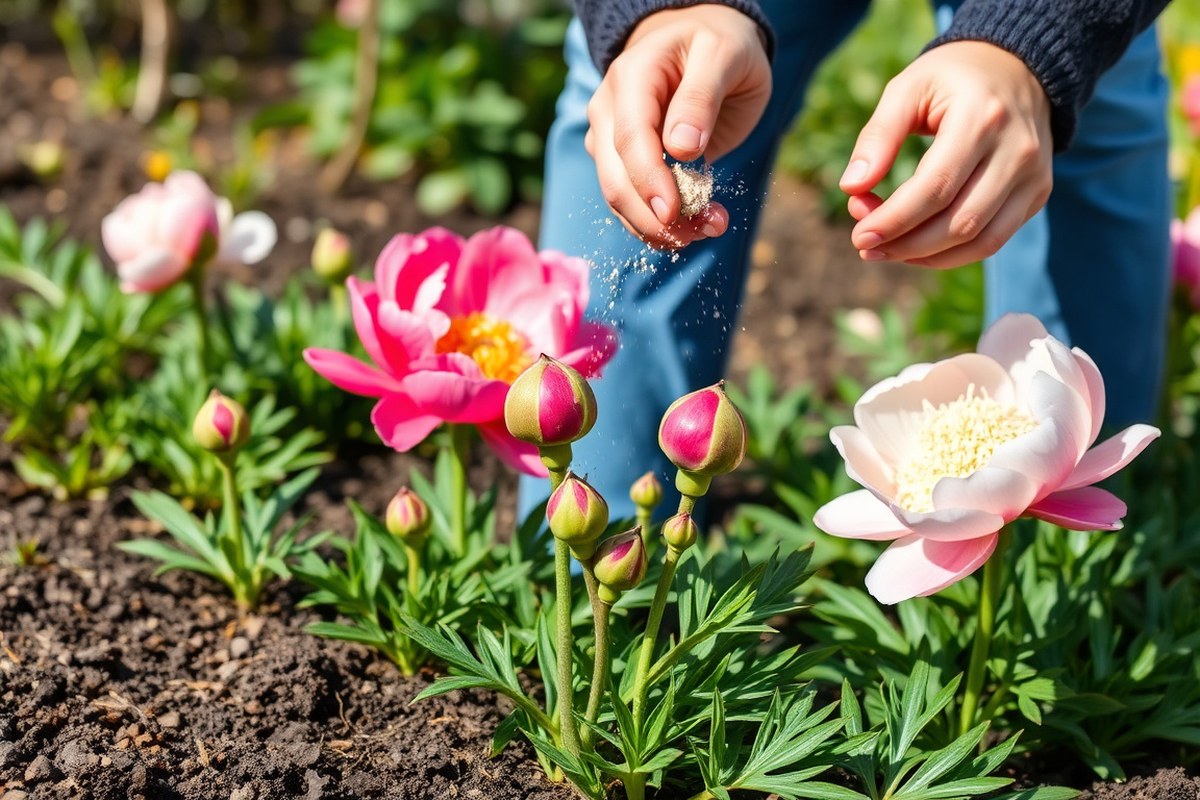
The best time to first fertilize peonies is in early spring. Aim to fertilize about four weeks before new shoots appear. This is usually when the soil starts warming up.
Do this before the buds show. This timing gives peonies a gentle nutrient boost to prepare for healthy growth and strong stems.
Another key time to fertilize is right after the petals fall, which happens in early summer. Feeding peonies at this stage helps them recover energy from bloom and build stronger roots. Adding fertilizer now supports their health through the rest of the growing season.
Avoid feeding peonies in late summer or fall. Fertilizing too late can cause new tender shoots. These shoots might not survive the winter, which weakens the plant over time.
Instead, apply a slow-release fertilizer in late fall if your soil needs a nutrient top-up. This helps roots grow before winter sets in.
Do not fertilize just because your peonies had a poor bloom. Sometimes bloom issues relate to light, water, or disease.
Only add fertilizer if you know the soil lacks nutrients. Overfertilizing or wrong timing can harm peonies by causing excessive leaf growth but few flowers.
For young plants, feed them in spring and fall during the first years. This helps roots and shoots grow strong. Repeat this to support healthy growth.
Established plants usually do well with just spring and early summer applications. Use a light spring feed to prevent plants from starving during blooms.
Fertilize again after petals drop. This helps build plant reserves.
After fertilizing in spring, add mulch to keep soil moist and cool. This complements feeding and helps peonies thrive by stabilizing soil temperature. Good timing means fertilizing before the main growth starts.
Feed once more after flowering. Avoid late feeding to prevent weak new shoots.
2. How to Choose the Right Fertilizer for Peonies

Peonies do best with fertilizers that have a balanced but slightly higher phosphorus and potassium content. A 5-10-5 or similar N-P-K ratio encourages strong blooms and healthy stems.
You can choose organic or synthetic types depending on your preference. But the key is avoiding too much nitrogen to prevent excessive leaf growth.
Understanding N-P-K Ratios for Peonies
The N-P-K numbers show nitrogen, phosphorus, and potassium amounts. High phosphorus (the middle number) supports blooming and strong roots. Potassium (the last number) helps overall plant health and flower quality.
Good peony fertilizers often look like 5-10-5 or 4-10-10. Nitrogen should be moderate or low so leaves don’t outgrow flowers. A balanced 1-1-1 ratio also works if you can’t find these exact numbers.
| Fertilizer Type | N-P-K Ratio | Primary Benefit |
|---|---|---|
| High-phosphorus (e.g., 5-10-5) | 5-10-5 | Stronger blooms and roots |
| Balanced slow-release | 1-1-1 | General steady nutrition |
| Lily Miller organic | 4-10-10 | Flower and stem development |
Organic Versus Synthetic Fertilizers
Organic options include bone meal, compost, kelp meal, and well-aged manure. Bone meal is rich in phosphorus and calcium, perfect for big blooms. Compost slowly feeds plants while improving soil texture and retaining moisture.
Synthetic fertilizers act faster but may risk overfeeding if applied wrong. You can use organic fertilizers all through the growing season. They won’t burn roots or add too many nutrients.
This makes them safe for your peonies. Mixing compost with a bulb fertilizer or a 10-20-20 formula also works well.
- Bone meal provides phosphorus and calcium for flowers and stems
- Well-aged mushroom compost adds nutrients and improves soil health
- Kelp meal supplies micronutrients to boost growth
- Chicken manure offers nitrogen but should be well composted
- Slow-release synthetics reduce feeding frequency
- Mixing organic and synthetic can balance nutrient supply
Using too much synthetic fertilizer can result in lush foliage but fewer flowers.
Choosing Between Granular, Liquid, and Spikes
Granular fertilizers are common, but they must be watered in. Water helps break down granules so peony roots can absorb nutrients. They tend to last longer and release nutrients gradually.
Liquid fertilizers work fast and show results within days. They’re great if your peonies look weak or tired.
Use them to give your plants a quick boost. Spikes are less common but convenient; they slowly release nutrients near the roots.
For most gardeners, granular or organic fertilizers applied in early growth work well. Use liquid feeds sparingly to avoid over-fertilizing. Spikes might suit container-grown peonies better than garden beds.
Special Fertilizer Ingredients and Additives
Bone meal and compost are excellent natural additives. Bone meal helps by boosting phosphorus and calcium. Compost provides a variety of nutrients and encourages beneficial soil life.
Some fertilizers include kelp or seaweed extracts for trace minerals. These can improve plant stress resistance and vigor. Avoid fertilizers that are too high in nitrogen to keep blooms strong.
- Bone meal supports strong flowers and sturdy stems
- Compost improves soil texture and nutrient balance
- Kelp meal adds trace minerals and growth stimulants
- Manure adds organic matter but should be well rotted
- Bulb fertilizers often have the right phosphorus level for peonies
3. How to Apply Fertilizer Safely and Effectively
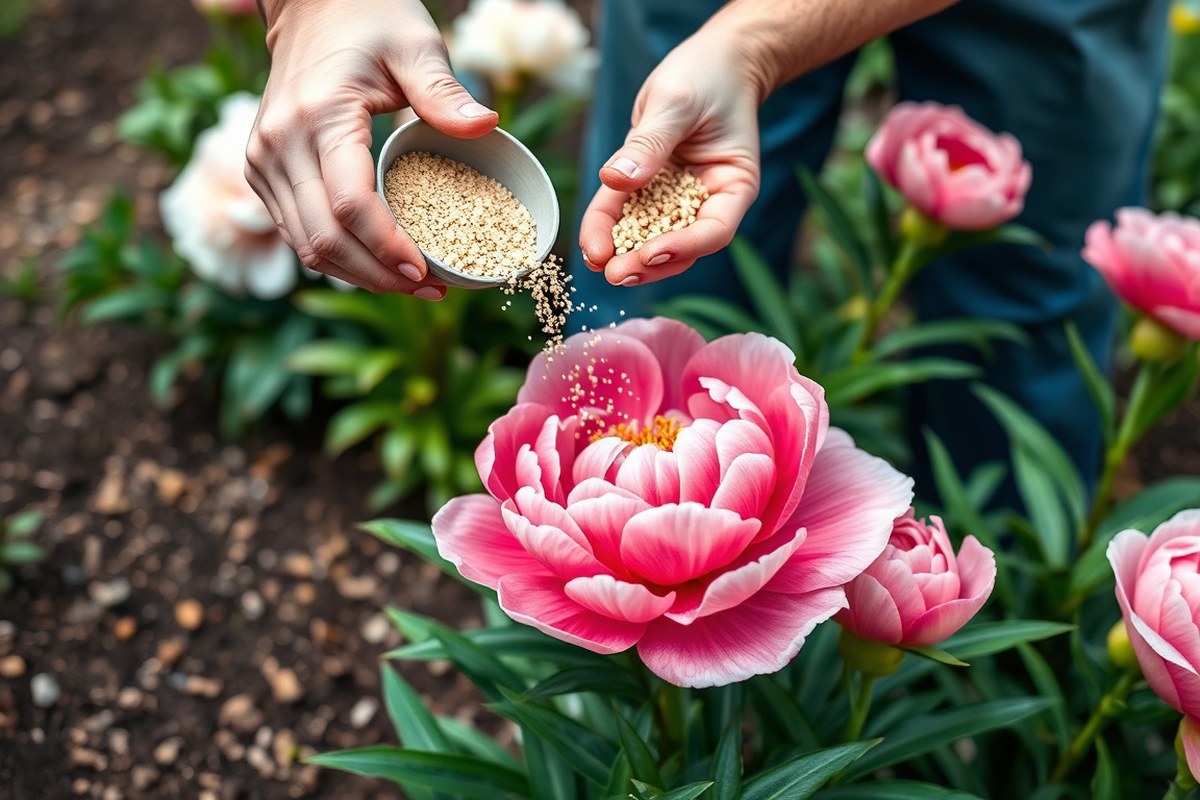
Apply fertilizer around the peony’s drip line, not near the stem. Lightly work it into dry soil then water it in well.
Avoid touching stems or leaves to prevent burns. Focus nutrients on roots instead.
Measuring and Spreading Fertilizer Around Roots
Measure a ring around the peony, 8 to 18 inches from the plant center. This area covers the root zone without risking stem damage. Use the fertilizer amount recommended on the package for your plant’s size.
Spread the fertilizer evenly in this ring. For rows of peonies, apply two strips, one along each side of the plants. Avoid piling fertilizer directly at the base of the stems to prevent chemical burn.
Incorporating Fertilizer into Soil Surface
Work fertilizer lightly into the top inch of dry soil. Use a small rake or hand tool for this.
You don’t need to dig deep. This step helps keep fertilizer from washing away and brings nutrients closer to the roots.
Do not apply fertilizer on wet soil because it increases the chance of root burn. Wait for dry conditions to ensure the fertilizer sticks to the soil particles. Mixing fertilizer into the soil surface improves uptake but be gentle to avoid root disruption.
Watering and Mulching After Fertilizing
Water the fertilized area immediately after application. Use a watering can or gentle hose stream.
Soak soil 3 to 4 inches deep. This moves nutrients into the root zone without washing fertilizer too far away.
Keep water off the foliage to prevent fungal issues. Remove old mulch before fertilizing in early spring. This step helps fertilizer reach the soil better.
After watering in fertilizer, add a thin 1-2 inch layer of fresh mulch. This helps keep moisture and protect roots.
Follow these steps for safe and effective fertilizing:
- Measure 8 to 18 inches from the peony center to mark the fertilizing ring.
- Spread fertilizer evenly in the ring avoiding the stem base.
- Lightly rake fertilizer into the top inch of dry soil.
- Water the area slowly and deeply to help nutrients soak in.
- Avoid wetting leaves or stems during watering.
- Remove old mulch before fertilizing in early spring.
- Apply a 1 to 2 inch fresh mulch layer after watering.
4. How Often Should You Fertilize Established Peonies?
Mature peonies usually need fertilizer twice a year. Apply it once before blooming in early spring and once after flowering ends. This timing supports healthy growth and stronger blooms without overloading the plant.
The amount varies by fertilizer type. Use 1/4 to 1/2 cup per mature peony.
Spread it 12 to 18 inches from the plant’s center to protect the crown. Gently work the fertilizer into the soil for better results.
Use a balanced fertilizer with an NPK ratio near 5-10-10. Feed your peony with this once it looks healthy. This works well for giving it extra nutrients.
Skip fertilizing if your peonies bloom well and have bright leaves. Over-fertilizing can cause weak stems and fewer flowers because the plant focuses on leaf growth instead.
You should also avoid feeding late in the season. Fertilizing after mid to late fall won’t help. Frost kills the leaves then, so plants rest.
The peony goes dormant and nutrient uptake stops. Peonies store nutrients in their roots during winter. So extra fertilizer then is wasted and can encourage disease.
Young peonies usually need less fertilizer than mature ones. They may require a light feeding starting around their third year. Change amount and timing based on soil quality and plant health.
Poor soil needs more fertilizer, rich soil less. Watch your plant’s growth to guide you. Use less if growth looks strong without extra feeding.
Feeding your peonies twice a year keeps them healthy if needed. The schedule helps keep the plants in good shape. Only feed when the plant shows need.
Don’t add fertilizer if your peony looks healthy. No poor growth or dull blooms means it’s fine. Avoid extra feeding if the plant shows no stress.
Watch your peony’s growth to know when to fertilize. Feed when it needs a boost. Skip fertilizing if it looks strong and healthy.
5. Signs Your Peonies Need Fertilizer
Yellowing leaves or pale foliage may mean your peony needs nutrients. You might also see fewer flowers and weaker stems than usual. These symptoms signal your peony isn’t getting enough fertilizer and may struggle to grow well.
But don’t jump to feeding right away. Poor flower production and leaf drop can happen from cold damage, drought, pests, or disease.
To be sure it’s a nutrient problem, check soil and weather conditions. Healthy soil plus proper water and no pests usually mean no immediate fertilizer is needed.
You can test your soil’s nutrient levels cheaply to see what’s missing. You can use a soil test kit to check nutrient levels. It can tell if nitrogen, phosphorus, or potassium are low.
Your local extension service can also help with soil tests. This helps avoid giving too much or the wrong fertilizer, which can hurt your plant.
- Leaves turning pale or yellow
- Slowed or poor new growth
- Few or no flower buds forming
- Leaves dropping off the plant
- Soil tests showing low nutrient levels
Your peonies need fertilizer when they show several signs from the list. Add fertilizer that focuses on phosphorus to boost blooming, but don’t overdo nitrogen.
Apply it to the soil around the roots, avoiding the crown. Work the fertilizer lightly into the soil for best results.
Applying fertilizer directly on the plant’s crown can damage it and harm growth.
Peonies grown in rich soil or showing no stress signs often don’t need extra fertilizer. Over-fertilizing can cause lush leaves but fewer flowers. Watch your plants yearly to adjust feeding as needed for the healthiest blooms.
6. Adjusting Fertilizing for Peony Age and Plant Type
Newly planted peonies need gentler feeding than mature ones. Use a balanced fertilizer with lower nitrogen, like 5-10-10, to avoid stressing young roots. Apply about half a cup of fertilizer around the plant in early spring.
Wait until the second growing season before adding more. This helps young plants develop slowly and safely.
Herbaceous peonies and Itoh peonies share similar fertilizer needs. Both do well with feeding once each spring using balanced fertilizer.
Tree peonies need less frequent feeding since they grow more slowly. Feeding them once in early spring and again lightly after blooming usually works well.
Container or indoor peonies require more frequent feeding because soil nutrients wash away faster. Use liquid fertilizer diluted to half strength every 3 to 4 weeks during the growing season. Avoid overfeeding by watching leaf color; dark green leaves mean the plant is well-nourished.
Young peony plants take small amounts of fertilizer to avoid burning new growth. Mature plants can safely get a full dose of fertilizer. Use about one cup per plant each spring.
This supports a strong, healthy growth. Do not feed young peonies more than half a cup.
Too much can slow their root growth or cause weak stems. Stick to a smaller amount for healthier plants.
The difference between herbaceous and tree peonies comes down to growth speed. Herbaceous peonies die back in winter. They regrow quickly in spring and need fertilizer.
This helps with fast leaf and flower growth. Tree peonies stay woody year-round and grow slower. They need less fertilizer to avoid excess leafy growth at the expense of blooms.
Here’s a quick comparison: New herbaceous and Itoh peonies get half doses in early spring only. Mature herbaceous and Itoh peonies get full doses once in early spring.
Tree peonies get light feeding once in early spring and after bloom. Container peonies get diluted liquid fertilizer every 3 to 4 weeks during growing months.
Adjust fertilizing based on plant size and type. Spread fertilizer granules evenly around the plant’s drip line. Keep at least 3 inches away from the stems.
This protects the stems and feeds the roots properly. Water well after feeding to help nutrients soak into the soil. This keeps your peonies happy and strong through their changing needs.
7. Common Fertilizing Mistakes and How to Avoid Them
Too much fertilizer can cause fertilizer burn, which damages roots and leaves. This happens when salts build up in the soil and draw moisture away from roots.
To prevent this, use only the recommended amount and water your peonies well after feeding. Avoid fertilizing late in the season because new growth won’t harden off before winter.
Using fertilizers with a lot of nitrogen leads to lush leaves but fewer flowers. Peonies need more phosphorus and less nitrogen for strong blooms.
Choosing a fertilizer with low nitrogen keeps your flowers healthy and vibrant. Overfeeding happens easily since peonies don’t need fertilizer every year once established.
Mistakes often happen when gardeners fertilize too often or too late. You might also see poor results from using lawn fertilizer high in nitrogen.
When you overfeed your plants, flush the soil with water before the next feeding season begins. This helps wash away excess salts and reduces the risk of burn.
- Over-fertilizing: cut back on feeding, and water plants deeply
- Applying fertilizer late in fall: stop fertilizing by late summer
- Using nitrogen-heavy lawn fertilizer: switch to bloom-focused fertilizer
- Ignoring fertilizer frequency: fertilize every three years after maturity
- Failing to flush soil after overfeeding: water thoroughly before next season
Correcting feeding mistakes takes care and patience. You can’t reverse fertilizer burn quickly. But reducing fertilizer and improving watering helps new growth.
Healthy peonies show rich green leaves with plenty of buds ready to open in spring. Your plants having too many leafy stems but few flowers means cut back on nitrogen.
8. Extra Tips for Maximizing Peony Bloom with Fertilizer
Fertilizing can boost flower size and quantity by giving peonies the right nutrients. Pair fertilizing with watering, mulching, and pruning for the best blooms. These steps help flowers last longer and look fuller.
Combining Fertilizer with Proper Watering
Water your peonies right after fertilizing to help nutrients reach their roots. This practice prevents root burn and ensures the fertilizer dissolves into the soil. Use about 1 inch of water per week, especially during dry spells.
Overwatering can wash nutrients away, so keep soil moist but not soggy. During the growing season, water in the morning to reduce fungal risks. Adjust watering if rain provides enough moisture.
Mulching Practices That Support Fertilization
Apply a light mulch layer after fertilizing to keep soil temperature steady and reduce weeds. Avoid thick mulch layers, as peonies prefer good air flow near their crowns. Use organic mulch like shredded bark or leaf mold.
Mulching helps conserve moisture and supports nutrient absorption. Stay about 2 inches away from the base to prevent crown rot. Refresh mulch yearly but keep the amount thin.
Using Supplements Like Epsom Salts Safely
Epsom salts can aid nutrient uptake by providing magnesium and sulfur. Sprinkle 1 tablespoon around established peonies every month in spring and early summer. Avoid overuse to prevent soil buildup.
Adding zinc and iron supplements can help struggling peonies grow stronger leaves and flowers. Use these only if leaf color fades or growth slows. Follow package directions or talk to a local garden center for doses.
Keep mulch layers thin and away from the peony crown to avoid rot and pest problems.
Step-by-Step Action Plan for Fertilizing Your Peonies
Follow these steps to keep your peonies healthy and blooming well. Each step tells you what to do and how to see results.
- Early Spring: Apply a balanced fertilizer around the base after new shoots appear. Look for strong, healthy growth within two weeks.
- After Blooming: Lightly feed peonies again to help root and foliage recovery. Leaf color should stay deep green.
- Mid-Summer: Avoid fertilizing now to prevent encouraging weak, late growth. Watch for faded leaves as a sign to stop feeding.
- Fall (Optional): Use compost or a slow-release fertilizer to prepare the plant for winter. Check soil moisture and health next spring.
- Regular Monitoring: Check for yellowing leaves or slow growth during the season. These signs may mean you need to add more fertilizer.
- Apply Water: Always water after fertilizing to help nutrients soak into the soil. Watch for soil moisture around the roots.
Frequently Asked Questions
Can I Use Compost Instead of Fertilizer for Peonies?
Yes, you can use compost as a natural fertilizer alternative. It improves soil quality and provides slow nutrient release that helps peonies grow healthy over time.
How Do I Avoid Fertilizer Burn on My Peonies?
To prevent burn, apply fertilizer sparingly and avoid direct contact with stems. Water the soil well after fertilizing to protect roots from concentrated nutrients.
Should I Fertilize Peonies in Containers Differently Than in the Ground?
Container peonies need gentler feeding, like half the amount used for garden plants. Apply fertilizer every two weeks to avoid overfeeding and root stress.
Can I Mix Fertilizers When Feeding Peonies?
Mixing different fertilizers can confuse plant nutrient balance and cause harm. Stick to one balanced or high-potassium fertilizer for the best results.
Does Rain Affect When I Should Fertilize Peonies?
Rain can wash away fertilizer, reducing its effect. Wait for dry weather or water manually after applying fertilizer to help nutrients soak in.
Is Organic Fertilizer Better for Peonies Than Synthetic?
Organic fertilizers release nutrients slowly and improve soil health. Synthetic options work fast but can risk burning roots if overused.
Wrapping Up
Fertilizing peonies correctly gives them the best chance to flourish. Start with feeding in early spring and watch your plants closely. That first healthy green shoot is your sign to begin caring with fertilizer.