How Much Does a Robot Lawn Mower Cost? A Complete Guide with Real Prices
Robot lawn mower prices in 2026 range from about $500 to over $5,000. Most buyers find good options between $1,000 and $2,500. These include models for various yard sizes and some with smart AI features.
Budget mowers usually cover up to a quarter acre. Mid-range models can handle half an acre or more with longer battery life. High-end versions add GPS tracking, app control, and rain sensors.
Installation may cost up to $800 if you hire a pro to set boundary wires. Wire-free mowers can cut setup costs if your yard suits them. Choosing the right size mower avoids paying for unneeded features.
Maintenance costs stay low but include battery replacements every few years. Blade changes cost about $20 to $50 each time. Planning these helps prevent surprises after buying.
Key Takeaways
- Expect to pay between $500 and $5,000 for a robot mower in 2026.
- Most robot mowers under $1,500 suit small to medium-sized yards.
- Professional boundary-wire installation can add as much as $800.
- Wire-free models cost more but reduce installation hassles and expenses.
- Picking the right mower size helps avoid overspending on unnecessary features.
- Robot mowers usually pay for themselves in 2 to 4 years versus lawn service.
How Much Does a Robot Lawn Mower Cost In 2026?

Robot lawn mowers in 2026 usually cost $500 to $3,500. The price depends on the size and features. Navigation technology also affects the cost.
Entry-level models start below $1,000 for simple yards. Mid-range mowers range from $1,000 to $2,500 with better navigation. Premium mowers, priced above $2,500, offer GPS or LiDAR systems for larger or complex lawns.
Entry-Level Models Under $1,000
These affordable robot mowers use boundary wires and suit small, flat lawns. They provide basic automation with limited navigation features. Their run time usually covers up to 0.2 acres efficiently.
Entry-level models offer straightforward scheduling and simple controls. They typically cost between $500 and $800, making them ideal for budget-conscious homeowners. Limited capabilities mean they work best on lawns under 8,000 square feet.
Mid-Range Models $1,000 To $2,500
Mid-range robot lawn mowers use wire-free RTK GPS navigation for better accuracy. They handle medium-sized yards between 0.25 and 0.75 acres and more complex layouts. These offer smartphone app control and virtual boundary setup.
This group costs between $1,000 and $2,500. They balance price and features, giving longer battery life and improved coverage. Most include Wi-Fi connectivity and better obstacle sensing for smoother operation.
Premium Models Above $2,500
Premium robot mowers come with advanced GPS, LiDAR, or vision-based technology. They suit large lawns up to 1.5 acres or uneven, hilly terrains. These models offer all-wheel drive and full mapping with customizable zones.
Expect prices from $2,500 to over $3,500 for these sophisticated mowers. They have longer battery life, full autonomy, and can handle multiple lawn zones. The upfront cost covers higher performance and premium features for demanding yards.
| Price Tier | Typical Price | Navigation/Boundary | Best For | Coverage |
|---|---|---|---|---|
| Entry / Budget | $500, $800 | Boundary wire | Small, flat lawns | Up to ~800 m² (0.2 acre) |
| Mid-Range | $1,000, $2,000 | Wire-free RTK GPS | Typical suburban yards | ~1,000, 3,000 m² (¼, ¾ acre) |
| Premium | $2,400, $3,500 | RTK + vision/LiDAR, AWD | Large or sloped yards | ~3,000, 6,000 m² (¾, 1.5 acre) |
The upfront price mostly depends on navigation technology and lawn size coverage. Boundary wire systems cost less but need installation effort. GPS and LiDAR models cost more but simplify setup and improve mowing precision.
How Installation Affects Total Robot Mower Costs
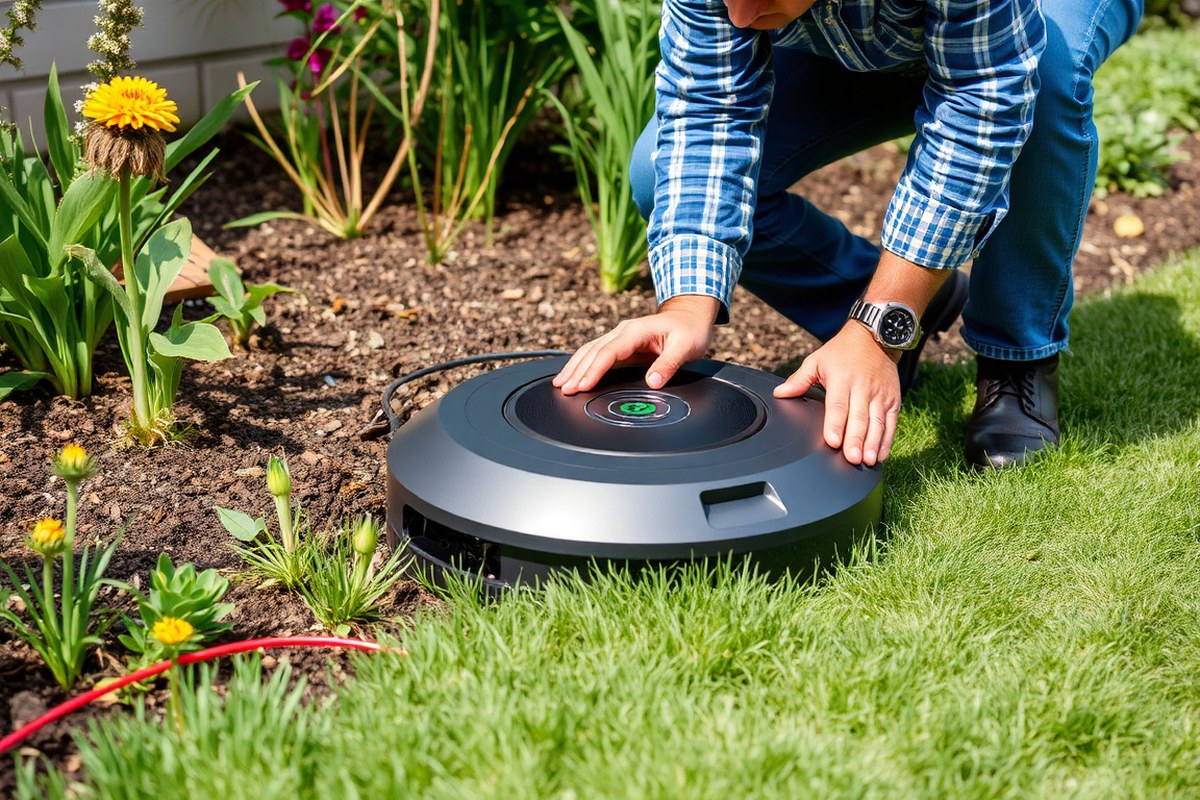
Professional installation of a robot lawn mower can add up to $800 to your initial costs. This mainly happens if your mower needs a boundary wire laid around your lawn.
Many buyers don’t expect this cost. So it’s easy to underestimate the total price when you only compare online prices.
Boundary wires tell the mower where to cut. They stop it from hitting flower beds or pools. The mower stays inside the wire boundary.
Your wire-free mower with LiDAR or GPS doesn’t need boundary wire. That means you skip this extra installation step and cost. Think about your comfort with yard work and measuring.
These affect whether you install the wire or hire help. If you like doing it yourself, you can save money.
- Measure your lawn’s perimeter accurately before installing any wires.
- Use boundary wire kits that come with staples or clips to secure the wire.
- Wear gloves and kneepads for comfort and safety during wire installation.
- Test the wire with the mower’s sensor before fully covering it with soil or mulch.
- Plan for about 3 to 6 hours for a 0.25-acre lawn if doing it yourself.
- Hire a professional if your lawn has complex edges or obstacles.
- Keep wire repair kits handy for future damage or breaks.
DIY installation can save you hundreds of dollars but takes time and some skill. Wrong wire setup can confuse the mower. It may miss spots or stop early.
This ruins its mowing job. Professionals have tools and experience, which makes their work faster and more reliable.
Pros charge $30 to $120 for materials. Labor can add up to $800 more. Hiring a pro usually costs this much.
For simpler lawns, expect the lower end. Complex or large yards push costs higher. Weigh this against your time and skill level to choose the best option.
Before starting, lay out the wire loosely around your yard to check fit and length. This saves redoing your work later.
Comparing Wired vs Wire-Free Robotic Lawn Mowers
Wire-free robot lawn mowers cost more upfront. They have advanced navigation. They don’t need boundary wires.
Wired models cost less at first. They need wires around the yard.
This adds time and hidden costs. Choosing depends on your yard’s size, shape, and how much setup you want.
Cost and Setup Comparison
Wired robot mowers cost less to buy, often starting around $500 to $1,500. Installing boundary wires takes several hours. It can raise setup costs by hundreds.
The process is required for wired mowers. Wire-free mowers cost between $1,500 and $4,000.
They skip wire installation. Their initial price is higher.
Wired models need precise wire laying and might require professional help, adding to total costs. Wire-free options save installation time but expect to pay two to three times more upfront. Hidden costs for wired types include wire repairs and occasional replacement if damage occurs.
| Feature | Wired Models | Wire-Free Models |
|---|---|---|
| Typical purchase price | $500 – $1,500 | $1,500 – $4,000 |
| Installation time | 2-6 hours (wire laying) | Minimal, no wires |
| Installation cost | Up to several hundred dollars | Usually included or low |
| Hidden setup costs | Wire repair or replacement | None related to wire |
Cost matters if budget is tight. But you must also think about your patience for setup.
Wired mowers can save money if you don’t mind extra work laying wires. Wire-free models suit those who want quicker and easier installation.
Flexibility and Navigation
Wired mowers follow fixed boundaries from wires. This limits navigation in oddly shaped yards. The wires set the movement path.
They manage slopes well if the wires are placed carefully. But can struggle with obstacles inside the wire perimeter. Wire-free mowers use GPS or sensors to map your lawn.
They offer flexibility around trees and flower beds. You can set artificial no-go zones.
Yards with complex shapes or many obstacles benefit from wire-free models. They adapt better to changes and operate without you resetting wires. Wired mowers work fine on yards with clear, simple boundaries and fewer obstacles.
Maintenance and Longevity Differences
Both types need blade replacements every 1 to 3 months. This depends on lawn size and grass type. Mowing frequency also affects the replacement time.
Wired models risk damaging boundary wires, which must be fixed to prevent mowing errors. Wire-free mowers avoid this issue but come with complex electronics that can be expensive to repair.
Battery life and other parts have similar lifespans for both. But wire-free units often cost more to service.
Keep in mind that frequent lawn cutting shortens blade life. So plan a budget for regular replacements no matter which type you pick.
Ongoing Costs: Maintenance, Blades, Battery, and Electricity
Replacement blades usually cost $20 to $40 each year. Check the blades every one to two months. Replace them each season or sooner if dull.
Keep an eye on their sharpness. Sharp blades keep the mower cutting efficiently and avoid damaging your grass.
Batteries need replacing every 3 to 5 years. Battery costs range from $150 to $400 depending on your model.
Battery life depends on how much the mower runs and your yard’s size. For most homeowners, expect to budget this cost once or twice during the mower’s lifetime.
Electricity adds about $10 to $20 per season. This cost depends on your mower’s runtime and your local electricity rates. Charging a robotic mower uses very little power.
Gas mowers use fuel that costs much more. They also have expensive maintenance.
Maintenance costs are generally low compared to the mower’s upfront price. You’ll likely spend around $50 to $100 yearly on blades and electricity combined. This keeps your mower running smoothly without surprise expenses.
Budget to check blades every few weeks. Replace them yearly or if they look worn out. Keep the mower cutting well.
Factor in a battery swap every few years. These ongoing costs are smaller than lawn services.
They’re also cheaper than keeping a gas mower. You save money over time.
Subscription and Hidden Fees to Watch For
Several robot mower brands charge annual subscription fees. These fees often unlock app features like remote control, scheduling, GPS tracking, and firmware updates. Without a subscription, some mowers lose key functions, making the device less useful over time.
Some subscriptions cost around $100 to $200 per year. This can add up, especially if your mower already costs $800 to $1,800 upfront. Evaluate if you actually need features tied to subscriptions before buying the mower.
Hidden fees come in different forms. Watch out for service fees tied to installation or warranty extensions. Unexpected expenses may come up if your insurance doesn’t cover mower damage.
Check your policy carefully before buying a robot lawn mower. This helps avoid surprise bills later on.
- Check if your robot mower brand requires a subscription for essential app features
- Ask if warranty coverage drops without a paid service plan
- Verify if installation fees are separate or included
- Review your home insurance for liability related to robot mowers
- Prepare for replacement parts and blade costs not covered by warranty
- Look into service support available without extra charges
- Compare battery replacement policies and related expenses
Subscriptions cover software updates and security patches, which keep the mower efficient and protect your data. Some brands lock firmware updates behind a paywall. So skipping subscription could mean missing out on improvements.
Warranty matters too. Brands with subscription models sometimes limit warranty claims if you haven’t paid annual fees. Check the warranty length before buying.
Know exactly what the warranty covers. Many robot mower warranties last 2 to 3 years. But some premium models offer longer protection.
Check your homeowners insurance about liability for robot mowers. This stops surprise bills if the mower causes damage or injury. Call your insurer to make sure.
Choosing the Right Mower for Your Yard Size and Terrain
Match your robot mower to your lawn size and terrain for best results. Small yards need simple models, while large or hilly yards require powerful, feature-rich mowers. Complexity like slopes and obstacles drives up the mower’s price and capabilities.
Small Yards Up to 0.25 Acres
For lawns up to 0.25 acres, budget models around $500 to $900 work well. These handle simple layouts with few obstacles and no steep slopes. Look for wire-based navigation and standard 2WD systems in this range.
Typical models include Worx Landroid and Robomow RX. Their batteries and cutting areas suit small suburban lawns without complex terrain. They won’t handle heavy grass or steep slopes very well.
- Coverage up to 1,000 m² (0.25 acres)
- Basic programming and navigation
- Standard drive system, mostly 2-wheel drive
- Less suited for wet or thick grass
- Simple obstacle avoidance, usually bumped wires
- Lower price under $1,000
These mowers work best on flat, open lawns. An overly complex yard can confuse simple sensors or slow you down.
Medium Yards 0.25 to 0.5 Acres
Mid-size yards need models covering 2,000 m² or 0.5 acres with advanced navigation. Models cost $1,000 to $2,500 and offer better programming options. Expect wire-free setups and some obstacle avoidance features here.
The Husqvarna Automower or Gardena Sileno fit this category well. They are reliable for medium lawns and handle mild slopes and varied terrain. Battery life supports longer cutting periods for greater coverage.
- Coverage around 2,000 m² (0.5 acres)
- Advanced sensors for navigation
- Obstacle detection and basic avoidance
- Handle gentle slopes up to about 20%
- Wire-free or boundary wire options
- Mid-range price between $1,000 and $2,500
Choose these if your yard has moderate complexity or slopes. They handle thicker grass better than budget models.
Large Yards over 0.5 Acres
Large lawns or those with steep slopes need premium mowers. Expect to spend $2,500 or more for units covering 2,500 to 5,000 m² (0.6 to 1.2 acres). They feature all-wheel drive and LiDAR or RTK GPS for precise navigation.
Models like the A3 AWD Pro 3500 and Segway Navimow X3 excel here. They conquer slopes up to 80% and detect obstacles visually. Their batteries last longer for big lawns, reducing charging downtime.
- Coverage from 2,500 m² to 5,000 m² (0.6 to 1.2 acres)
- All-wheel drive (AWD) for slopes beyond 45%
- LiDAR or RTK GPS navigation systems
- Advanced obstacle detection and avoidance
- Handle wet, thick grass and complex layouts
- Higher price from $3,000 to over $5,000
These mowers suit yards with many obstacles or steep hills. Spending more means less manual intervention and better lawn health.
How Robot Mower Costs Compare to Professional Lawn Service
Professional lawn mowing usually costs between $30 and $50 per visit. Mowing your lawn every two weeks for six months costs $360 to $600 yearly. This price covers the work but can add up quickly over several years.
A robot lawn mower costs between $700 and $1,500 upfront, depending on the model and features. It can last about 8 to 10 years. This is longer than gas mowers.
Gas mowers typically last about 5 years. A robot mower costs less to maintain.
It saves you money on mowing services. Over time, it pays for itself.
| Cost Aspect | Professional Service | Robot Lawn Mower |
|---|---|---|
| Annual Cost | $360 – $600 | $70 – $150 (maintenance, electricity) |
| Initial Cost | $0 (pay per visit) | $700 – $1,500 |
| Lifespan | N/A | 8 to 10 years |
| Break-even Time | N/A | 3 to 5 years |
Say you pay $450 a year for mowing. Buying a $1,200 robot mower with $120 yearly upkeep will break even in about 4 years. After that, you save the full cost of professional service minus small maintenance expenses.
Robot mowers often make more financial sense for medium-sized yards. For very small lawns, the initial cost may seem too high compared to occasional service. Large properties might need multiple robots or a professional service, which raises the break-even time.
Common Cost Mistakes and How to Avoid Them
Many new buyers miss hidden costs like boundary wire replacement or extra charging stations. These can add several hundred dollars, pushing your budget beyond the sticker price. Also, choosing features you don’t really need drives up cost without improving your lawn.
Improper installation can cause your mower to get stuck or miss sections of the yard. This means more time troubleshooting, extra boundary wire, or even professional service calls. Spending a little more upfront for correct setup can save big headaches and expenses later.
- Check if your yard suits wire-free or wired models to avoid added installation costs.
- Skip fancy app controls or GPS if you only need basic cutting features.
- Ask if extra boundary wire or perimeter kits are part of the price or extra.
- Don’t overlook costs for replacement blades and batteries over time.
- Consider upfront costs vs. Long-term savings, cheaper models may cost more to maintain.
- Have a pro confirm placement if your terrain is hilly or complex to avoid mower errors.
The wrong feature choice can make your mower far pricier than necessary. High-end GPS tracking or smartphone controls may appeal but cost up to $1,000 extra. Your yard is small or simple, so these extras may not help much.
Buyers with large or irregular yards should consider wire-free models despite higher initial costs. This avoids constant fixing of boundary wires and offers better coverage as your landscape changes. Wired models suit smaller, simpler yards better.
They cost less. These models are usually easier to keep in good shape.
Check what your mower’s price covers. Watch for hidden costs. See if you need to buy parts later.
Step-by-Step Action Plan for Your Robot Lawn Mower
Follow this plan to get your robot lawn mower ready and keep it running well. It helps you avoid extra costs and enjoy a neat lawn.
- Before buying: Measure your lawn’s size and check terrain. Choose a mower that fits your yard’s shape and obstacles.
- Day 1: Install the mower per instructions or hire a pro. Confirm it runs smoothly around the edges and obstacles.
- Week 1: Monitor the mower’s schedule and make small path adjustments. Ensure full lawn coverage without missed spots.
- After 2 weeks: Check and clean blades. Sharp blades cut grass better and reduce power use.
- Month 1: Inspect the battery and charging system for faults. Confirm the mower finishes each cycle without stopping early.
- Quarterly: Replace blades if they look dull. Trim wires and update software if your mower supports it.
- Annually: Service the mower or recalibrate sensors for best performance. Notice any changes in cutting or navigation to fix problems early.
Frequently Asked Questions
How Much Does a Robot Lawn Mower Usually Cost Upfront?
Most robot lawn mowers cost between $800 and $2,500. You can find cheaper models for less than $1,000.
Higher-end ones cost over $5,000. Price depends on features and lawn size.
What Additional Costs Should I Expect Besides Buying the Mower?
Installation fees, especially for boundary wires, can add up to $800. Also budget for blade replacements, battery upkeep, and electricity, which are low but ongoing costs.
How Does Yard Size Affect the Price of a Robot Lawn Mower?
Larger yards need more powerful and expensive models. A mower covering 0.87 acres costs around $3,200. Small-yard units can cost under $1,000.
Are Wire-Free Robot Lawn Mowers More Costly Than Wired Ones?
Yes, wire-free models tend to be pricier due to advanced navigation systems. Wired mowers usually require installation but cost less upfront.
How Does a Robot Lawn Mower Compare to Hiring a Lawn Service?
A lawn service costs $40 to $60 per visit, totaling $1,200 to $1,800 a season. A robot mower pays for itself after 2 to 4 seasons through savings.
What Hidden Fees Are Common with Robot Lawn Mowers?
Some brands charge subscription fees for app use or updates. Check for these before buying to avoid unexpected extra expenses.
Before You Go
Robot lawn mowers cost more upfront but save you time and mowing hassle. Picking the right model for your yard size and needs avoids surprises. Start by measuring your lawn and reviewing mower options to get started smart.