What Can Be Planted with Tomatoes: 8 Best Companions for Health and Yield
What can be planted with tomatoes to help them grow better and produce more? Companion planting is the answer. You can grow herbs, flowers, and some vegetables next to tomatoes to boost health and yield.
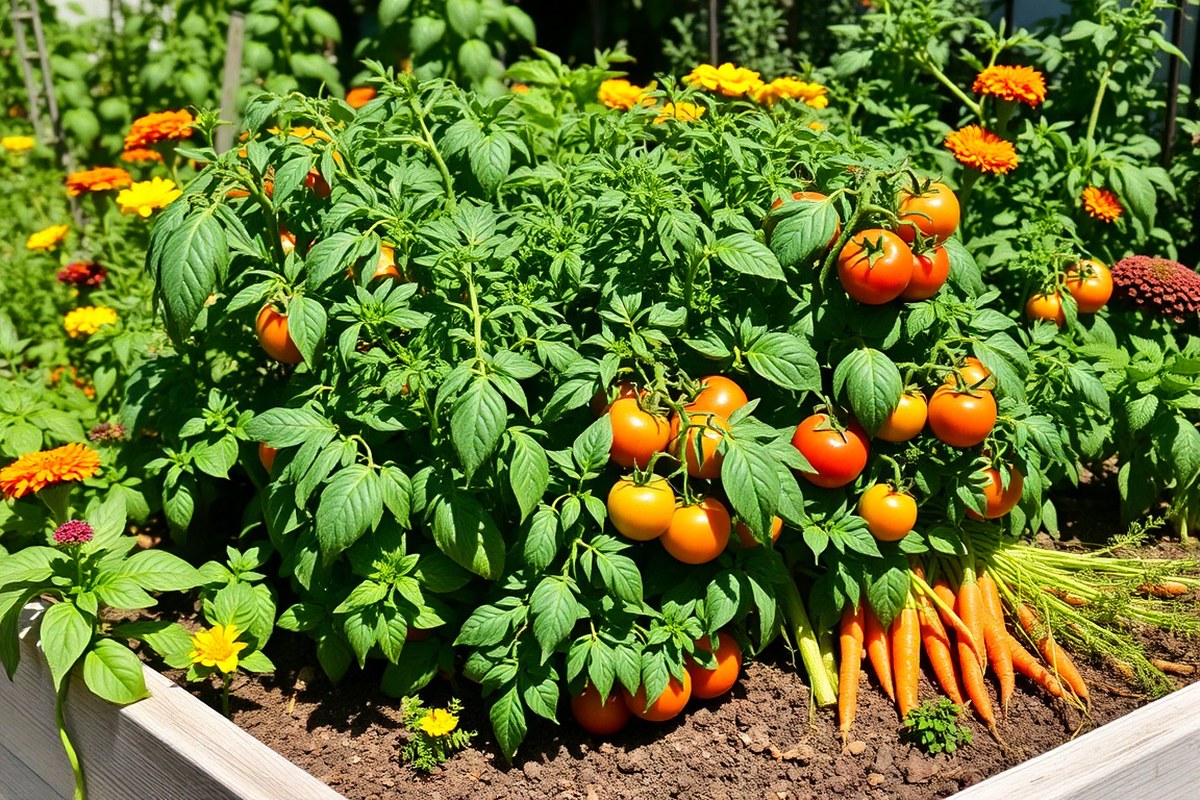
Herbs like basil and chives improve tomato flavor and fight pests naturally. Flowers such as French marigolds create a barrier against harmful bugs. Vegetables like peas add nitrogen to the soil, helping tomatoes thrive.
Space tomato plants 24 to 30 inches apart. Plant smaller companions 12 to 18 inches away.
This arrangement ensures good air flow and room for growth. Keep companions from crowding tomato bases to avoid diseases and stress.
Key Takeaways
- Plant basil 12 to 18 inches from each tomato to boost flavor and yields.
- Grow peas near tomatoes to add nitrogen and increase tomato production.
- Use French marigolds around tomato beds to repel pests effectively.
- Leave 24 to 30 inches spacing between tomato plants for air circulation.
- Tuck smaller herbs like chives into gaps between tomato plants.
- Avoid crowding tomato bases to prevent fungal diseases and plant stress.
Top Companion Plants to Grow with Tomatoes

Planting the right neighbors can significantly boost your tomato yield. Companion plants discourage pests, improve growth, and improve flavor. For instance, basil repels aphids and thrips while possibly making tomatoes taste better.
Marigolds offer pest control by repelling whiteflies and killing nematodes in the soil. Nasturtiums act as a trap crop that attracts aphids away from tomatoes. Garlic is also great for keeping pests away naturally.
- Basil: repels thrips and aphids, may improve tomato flavor
- Marigolds: deter whiteflies, reduce soil nematodes
- Nasturtiums: trap aphids, protect tomatoes
- Garlic: natural pest repellent
- Borage: attracts aphid parasites, supports pollination
- Carrots: loosen soil and do not compete for nutrients
- Onions: repel many insect pests and require minimal space
Plant low-growing companions like carrots or onions near tomato bases to shade soil and suppress weeds. Borage planted at bed ends attracts beneficial insects that keep aphids in check. These plants increase pollination, which can improve fruit set and yield.
To get the most from companion planting, space your tomatoes 24 to 36 inches apart. Place companions in the spaces between to allow airflow and reduce disease risk. Avoid planting fennel nearby, as it inhibits tomato growth.
How Companion Planting Improves Tomato Growth and Flavor
Companion plants improve tomato pest resistance by masking tomato scents and repelling insects. Plants like onions give off strong sulfur smells that keep aphids and thrips away.
Herbs such as basil and borage also help deter pests while attracting beneficial pollinators. These natural defenses reduce the need for chemical pesticides, which can harm your soil and plants.
Some companion plants actually improve tomato flavor and aroma. Basil, especially, releases oils that can boost tomato taste.
Growing basil 12 to 18 inches from tomato stems lets these benefits spread without crowding. Studies even show that borage next to tomatoes increases fruit quality while keeping pests at bay.
Nitrogen fixation is another key benefit from companion plants like beans and peas. These plants add nitrogen to the soil, a important nutrient for tomatoes. One study found tomatoes grown with peas had 20% higher yields than those without.
Tomatoes need soil that drains well and stays moist. This soil should also have plenty of nutrients. Companion plants help make this ideal soil for tomatoes.
Planting lettuce as a ground cover around tomatoes conserves soil moisture and prevents weeds. Good ground cover keeps tomato roots cool and limits water evaporation. This results in healthier plants producing more fruit.
Avoid plants that compete for too many nutrients or cause diseases. These companion plants can hurt tomato growth. They also lower the amount of tomatoes you get.
Plant companions 12 to 18 inches away to balance pest defense without crowding tomato roots.
Herb Companions: Boosting Flavor and Pest Resistance
Herbs like basil, chives, parsley, oregano, and thyme grow well near tomatoes. They repel pests and sometimes improve flavor, so they’re great for small gardens. Plant herbs far enough from tomato stems to avoid crowding and support healthy growth.
Basil Varieties for Tomato Companionship
Basil is the most popular herb to plant with tomatoes. It helps repel thrips, aphids, and spider mites and may improve tomato flavor.
Plant basil about 12 to 18 inches away from each tomato plant. This spacing gives both plants room for air circulation and growth without competing for nutrients.
| Plant | Primary Benefit | How to Plant |
|---|---|---|
| Basil | Repels thrips, aphids, spider mites; possible flavor improve | Space tomato plants 12 to 18 inches apart and pinch off flowers early |
Pinch basil flowers to keep the plant bushy and focused on leaf growth. Choose Genovese or Italian basil for the best flavor pairing with tomatoes.
Chives and Other Alliums
Chives and onions repel aphids and other pests common to tomatoes. They also attract beneficial insects, helping balance your garden’s ecosystem.
Plant chives around the edges of your tomato beds for near-year-round pest control. Space them at least 12 inches from tomato stems to avoid crowding.
- Chives grow well in full sun to partial shade.
- They reach about 12 to 24 inches tall.
- Garlic and onions also prefer full sun and well-drained soil.
Plant garlic and onions near tomatoes in early spring. This shared timing maximizes both crops’ benefits through the growing season.
Parsley, Oregano, and Thyme Tips
Parsley, oregano, and thyme support tomatoes by attracting pollinators and repelling pests with their scents. They take up little space and grow well beside tomato plants.
These herbs need full sun or partial shade, like tomatoes, and prefer well-drained soil. Start parsley and oregano at the same time as your tomato seedlings for best results.
| Herb | Lighting Conditions | Average Height |
|---|---|---|
| Parsley | Full Sun to Partial Shade | 12, 18 inches |
| Oregano | Full Sun | 12, 24 inches |
| Thyme | Full Sun | 6, 12 inches |
Thyme’s low height makes it a good groundcover around tomatoes. Parsley can serve as a pest barrier when planted in borders or between tomato rows.
Vegetables That Pair Well with Tomato Plants
Plant peas and beans near tomatoes to improve yield. They add nitrogen to the soil. This helps your tomatoes grow better.
Root vegetables and leafy greens help the soil stay healthy. They give shade or loosen soil around tomato roots. Both are good for tomatoes.
Plant nitrogen-fixers next to tomatoes to boost growth. After harvest, grow cool-season root or leafy crops nearby. This rotation keeps soil healthy.
Beans and Peas for Nitrogen Fixation
Legumes like peas and bush beans add nitrogen to the soil. This feeds tomato plants naturally. They help reduce the need for fertilizer.
Plant bean seeds when you move tomato seedlings outside. This staggers growth and boosts soil health. Both crops benefit from this timing.
Climbing beans can grow among taller tomato plants. Bush beans need more space beside them.
Snap peas grow well with sun and some shade. They reach 18 to 36 inches tall. This size suits planting near tomatoes.
Bush beans grow 12 to 24 inches tall and prefer full sun alongside tomatoes. Using these legumes improves soil nitrogen levels, which heavy feeders like tomatoes need.
Root Crops: Carrots, Radishes, and Onions
Carrots, radishes, and onions loosen soil near tomato roots. This lets in air and moisture. It improves tomato root health.
Carrots grow 8 to 12 inches deep and prefer cooler weather. So tomato shade helps extend their season. Harvest roots early to avoid crowding tomato plants as summer warms up.
Radishes are quick growers, harvesting in just a few weeks and helping drainage. Onions and garlic work as easy companions by occupying different soil layers without rooting competition. Plant these root crops after tomatoes to use empty garden space for a cool-season harvest.
Lettuce and Other Leafy Greens
Lettuce stays low and grows well in partial shade. It makes a good ground cover under tomatoes. This protects the soil.
It reduces water evaporation and suppresses weeds near your tomatoes. Plant lettuce early in the season or just after tomatoes start fruiting.
Celery and leafy greens provide ground cover and shade. They help soil keep moisture but avoid becoming too wet. This benefits tomatoes.
Sow lettuce 10 to 12 weeks before your first frost to extend your harvest. These crops help cool the soil and protect tomato roots from heat stress.
Use this table to plan your vegetable planting with tomatoes. It shows light needs, difficulty, and average height, helping you space crops properly:
| Vegetable | Lighting Conditions | Difficulty | Average Height |
|---|---|---|---|
| Carrots | Full Sun to Light Shade | Moderate | 8, 12 inches |
| Lettuce | Partial Shade to Full Sun | Easy | 6, 12 inches |
| Garlic | Full Sun | Easy | 12, 18 inches |
| Onions | Full Sun | Easy | 12, 24 inches |
| Bush Beans | Full Sun | Easy | 12, 24 inches |
| Peas | Full Sun to Partial Sun | Easy | 18, 36 inches |
| Celery | Full Sun to Light Shade | Moderate | 12, 18 inches |
Knowing this helps you avoid plant crowding. It makes sure each plant grows well with your tomatoes.
Each plant gets enough space. Combining nitrogen-fixers, root vegetables, and leafy greens creates a balanced garden ecosystem.
Flower Companions That Protect and Attract Beneficials
Planting certain flowers with tomatoes helps control pests and attracts pollinators. Flowers like marigolds and nasturtiums can reduce nematodes and aphids. Sweet alyssum and similar blooms draw bees, boosting tomato pollination.
Marigolds and Nematode Control
Marigolds, especially French marigolds, give off a scent that repels nematodes and other soil pests. Their roots release chemicals that suppress harmful nematodes for several years. Plant marigolds closely along the edges of your tomato patch.
They form a barrier that helps protect your tomatoes. This can keep pests away from your plants.
French marigolds usually stay 10, 24 inches tall, making them easy to place alongside tomato rows. African marigolds tend to grow taller and may overshadow smaller tomato plants if planted too close. Planting marigolds in full sun encourages stronger growth and better pest control.
| Flower | Lighting Conditions | Difficulty | Average Height |
|---|---|---|---|
| Marigolds | Full Sun | Very Easy | 10, 24 inches |
| Nasturtiums | Full Sun to Light Shade | Easy | 8, 12 inches (trailing) |
| Calendula | Full Sun | Easy | 12, 24 inches |
Planting marigolds densely around tomatoes maximizes pest protection.
The strong scent and root chemicals of marigolds keep pests away. Avoid overcrowding, which can reduce airflow and cause disease issues.
Nasturtiums as Trap Crops
Nasturtiums act as trap crops by attracting aphids and caterpillars away from tomato plants. Setting these flowers a short distance from tomatoes lures pests onto them instead. This reduces damage to your tomato leaves and fruit.
Trailing nasturtiums grow low and spread wide, influencing how close you plant tomatoes. Position nasturtiums along the edges or in gaps near tomato beds for best effect. Marigolds have a strong peppery smell that repels flea beetles.
They can reduce fungal diseases in your garden. This works by drawing away whiteflies from tomatoes.
| Flower | Lighting Conditions | Difficulty | Average Height |
|---|---|---|---|
| Nasturtiums (Trailing) | Full Sun to Light Shade | Easy | 8, 12 inches |
Keep nasturtiums a few inches away from tomato stems to avoid crowding.
Spacing nasturtiums correctly lets them lure pests without competing for nutrients. Prune back excess growth if they start shading tomato plants.
Sweet Alyssum and Other Pollinator Magnets
Clusters of tiny white sweet alyssum flowers attract bees and other beneficial insects. Adding sweet alyssum near tomatoes improves pollination, which supports better fruit yield. Plant them in partial to full sun for maximum bloom and insect visits.
Choose flower blends that include borage, calendula, and zinnias for a mix of pollinator magnets. These flowers vary from 4 inches up to 36 inches tall.
So place shorter blooms close to tomato bases. Taller flowers can go at garden edges to avoid shading tomatoes.
| Flower | Lighting Conditions | Difficulty | Average Height |
|---|---|---|---|
| Sweet Alyssum | Full Sun to Partial Sun | Easy | 4, 10 inches |
| Borage | Full Sun | Moderate | 18, 36 inches |
| Zinnias | Full Sun | Easy | 12, 36 inches |
Mix several flower types to attract a wider range of pollinators.
Planting a blend of flowers in clusters encourages more bee visits. Keep flowers watered and deadhead spent blooms to extend flowering time.
Plants to Avoid Near Tomato Gardens
Some plants can harm your tomato garden by blocking nutrients or attracting pests. Fennel is a big problem because it releases chemicals that stop tomato plants from growing well. It also pulls nutrients from the soil, making less available for your tomatoes.
Potatoes and brassicas such as cabbage and broccoli don’t mix well. They compete with tomatoes for soil nutrients, which hurts tomato growth.
This nutrient fight slows tomatoes and leads to smaller fruits. Potatoes can also pass diseases that cause blight to tomatoes.
You can avoid these problems by keeping a do-not-plant list handy. Here are some key plants to keep away from your tomatoes:
- Fennel, slows growth by releasing harmful chemicals
- Brassicas (cabbage, broccoli, cauliflower), compete for nutrients
- Potatoes, share diseases and compete for nutrients
- Corn, attracts pests and spreads similar diseases
- Walnut trees, produce toxic substances that harm tomatoes
- Onions, leeks, garlic, avoid near tomatoes if you have thrips
Check your garden plan early and move these plants at least several feet away from tomatoes. Give tomatoes space to access sunlight and nutrients without competition. Watch your tomatoes for yellowing leaves or stunted growth.
These signs mean tomatoes may be too close to bad neighbors. Poor growth shows your plants are struggling.
Plants like pumpkins or squash do better near tomatoes. They shade the soil and help reduce water loss. This helps keep the soil moist for tomatoes.
The key is to check your garden often. Keep tomatoes 3 to 5 feet away from harmful plants.
This space helps tomatoes grow better and stay healthy. This effort only takes a little planning but saves you time spent fixing poor growth later.
Practical Tips for Spacing and Timing Companion Planting
Space companion plants far enough from tomato stems to avoid root and leaf crowding. Tomatoes need 24 to 30 inches between plants. So companions should fit within that range without squeezing.
Give tomatoes enough space to get plenty of light and airflow. This helps keep leaves dry. Dry leaves prevent disease from spreading.
Plant herbs like basil about 12 to 18 inches from each tomato. This distance lets basil grow close without overshadowing the tomato vines.
Root crops like carrots do well when planted early before tomatoes get too large. They grow underground while tomatoes climb trellises overhead.
Avoid overcrowding by planning your tomato bed carefully. You can space tomatoes 24 to 30 inches apart along the bed’s center.
Plant companions in between or beside, following their recommended distances. This setup helps prevent competition for water and nutrients.
| Plant | Spacing from Tomato Stem | Notes on Timing |
|---|---|---|
| Tomato | 24, 30 inches between plants | Space down the center of the bed |
| Basil | 12, 18 inches from each tomato | Plant alongside tomato transplants |
| Carrots | Fill spaces between tomato plants | Plant early in the season before tomatoes overshade |
| Cilantro | Share space between tomatoes | Succession plant throughout the year |
| Asparagus | Interplant tomatoes after asparagus harvest | Use empty bed space during asparagus downtime |
Plant companion herbs like basil at the same time as tomato transplants. Root vegetables such as carrots and beets go in earlier to finish before tomatoes grow tall. Cilantro can be planted successively since it grows quickly but doesn’t take much space.
Using bed space efficiently prevents overcrowding and helps all plants thrive. Overcrowding leads to poor airflow and shared root zones, causing stress. Give each plant enough room and plant companions at proper times for best yields.
Common Companion Planting Mistakes with Tomatoes and How to Fix Them
Planting companions too close to tomatoes often causes crowding, which hurts air circulation. Poor airflow around tomato plants invites fungal diseases.
Leave at least 12 to 18 inches between tomato plants and their companions. This space helps keep leaves dry and reduces disease risk.
Look for signs of incompatible plants early by watching growth and leaf health. Wilting, yellow leaves, or stunted growth can signal problems. Some companions like onions and garlic give off scents that protect tomatoes.
These smells can keep pests away. But planting them too close can harm sensitive plants nearby.
You might find more pests even with companion plants. This can happen if you choose the wrong pairs. Overcrowding the plants also invites pest problems.
Beans help tomatoes by adding nitrogen to the soil. But pole beans climb and may block sunlight from tomato leaves.
This can hurt tomato growth. A fix is cutting back overcrowded vines or relocating plants the next season.
- Check plant spacing: 12-18 inches between tomatoes and companions
- Choose companions with compatible water needs and growth habits
- Use strongly-scented plants like garlic carefully to avoid stressing tomatoes
- Monitor plants weekly for pests or signs of poor health
- Remove heavily infested leaves or plants promptly to stop spread
- Adjust companion choices seasonally based on your garden’s pest patterns
- Keep companion plants trimmed to improve airflow around tomatoes
Start by mapping your garden on paper or use markers to space plants well. When you see a rise in pests, identify them quickly and act. Spraying leaves with water in the morning can reduce some pests.
This method avoids the use of chemicals. It helps keep your garden natural.
Regularly check companions and tomatoes for damage or stress to catch problems fast.
Also, be aware that some herbs liking cooler temperatures than tomatoes won’t pair well long-term. Plant these herbs separately or late in the season. Adjusting your planting timing ensures both tomatoes and companions thrive without crowding or competing.
Step-by-Step Action Plan for Companion Planting with Tomatoes
Follow these steps to plant companion plants that help tomatoes grow better. Watch your garden to see when these actions work.
- Before planting: Choose herbs like basil and marigolds to place near your tomato plants. These herbs improve flavor and keep bugs away.
- Planting time: Space tomato seedlings a minimum of 18 inches apart. This distance gives enough room for companions like carrots or lettuce. Check for proper spacing by seeing if you can fit your hand between plants.
- Two weeks after planting: Add flower companions like nasturtiums around tomatoes. Look for fewer pests to know this is working.
- Mid-season (4-6 weeks in): Thin crowded plants if tomato leaves start to touch much. This helps air flow and reduces disease risk.
- Throughout the season: Water tomatoes at the base, avoiding leaves and companion plants. Confirm success when companions stay healthy without mold or mildew.
- Harvest time: Notice the size and taste of tomatoes. Better flavor often means your companion plants helped.
- End of season: Remove plants that don’t get along well with tomatoes, like fennel. Note which plants you want to avoid next season.
Frequently Asked Questions
Can I Plant Garlic with Tomatoes?
Planting garlic next to your tomatoes is a well-known method to deter pests. Garlic releases natural chemicals that protect tomatoes from insects. It also uses few nutrients and water, so it won’t starve your tomatoes.
Is Fennel Good to Plant Near Tomatoes?
Avoid planting fennel close to your tomato plants. Fennel uses up nutrients and space that tomatoes need to thrive. This competition can stunt tomato growth and lower your garden’s productivity.
Can I Space Tomatoes Closer If I Plant Companion Herbs?
No, tomatoes still need 24-30 inches between plants, even with companions. Proper spacing ensures good airflow and reduces disease risk. Companion herbs don’t replace the need for healthy tomato spacing.
Does Planting Basil Near Tomatoes Improve Growth?
Yes, basil improves tomato growth and flavor when grown nearby. It also boosts the production of natural compounds that can help with pest resistance. Plant basil close, but don’t crowd the tomatoes.
Is Lettuce a Good Follow-On Crop After Tomatoes?
Lettuce is ideal after tomatoes because it prefers cooler weather. It matures in 30 to 70 days, giving you a quick harvest. Plant lettuce as the tomato season ends for continuous garden use.
Can Tomatoes Grow Near Walnut Trees?
No, tomatoes grow poorly near walnut trees. The walnut roots release toxins that make tomatoes wilt and die. Avoid planting tomatoes within the root zone, which extends beyond the tree canopy.
Before You Go
Plant your tomatoes with the right companions to grow strong and tasty fruit. Start by picking a herb or flower to plant near your tomatoes today. Watch your garden changes, and adjust as you learn more about your plants.